
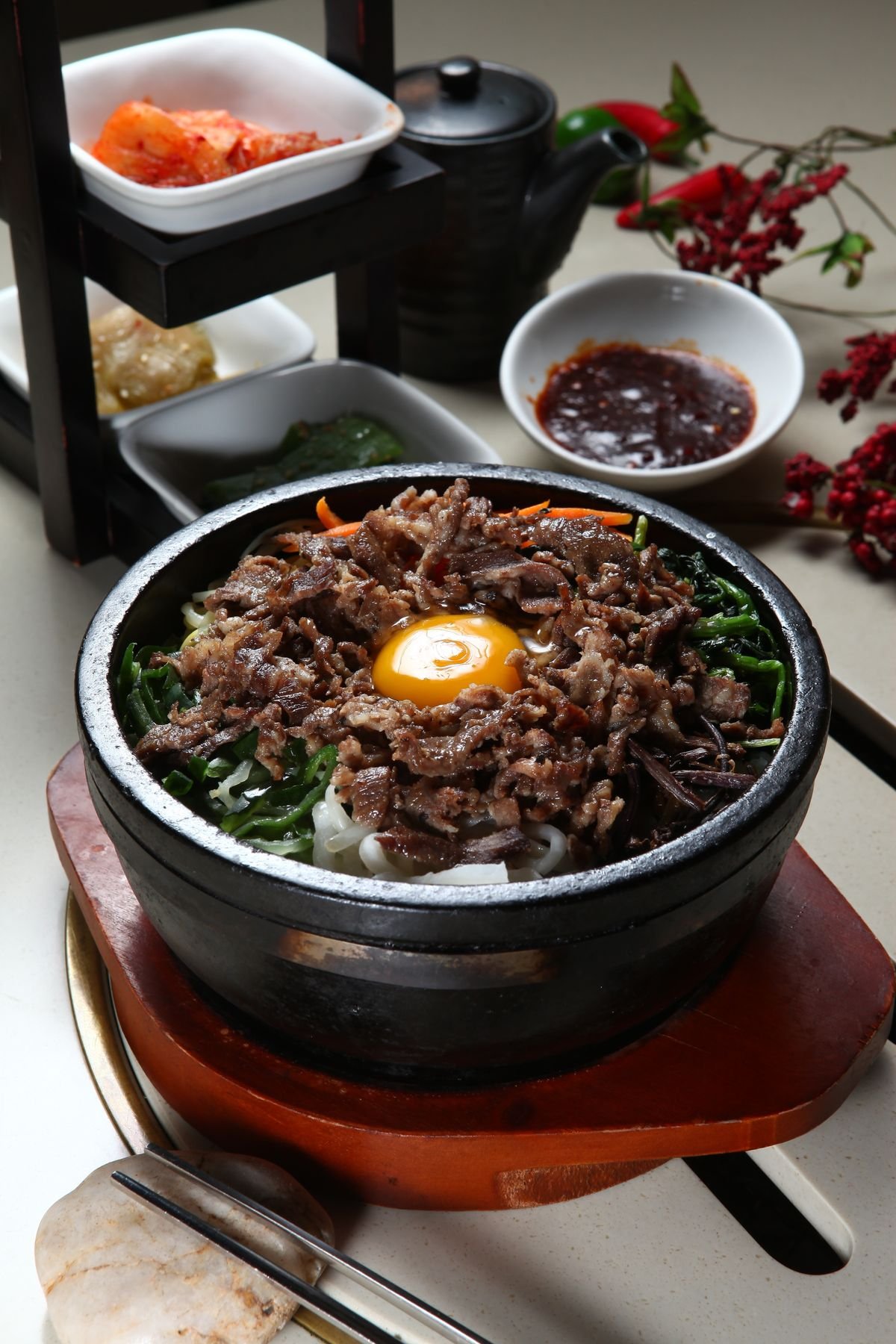
If you are searching for best bibimbap near me, you probably want a bowl of rice topped with colourful vegetables, seasoned meat and a fried egg, with a spoonful of spicy gochujang to mix through it all. Bibimbap is Korea’s most famous rice dish, and it is also one of the most satisfying: hot rice, crisp vegetables, savoury beef and a rich egg yolk, all mixed together at the table. This guide explains what the best bibimbap near me looks like, how to tell a great bowl from an average one, where to find it, and how to make it at home.
Key Takeaways
- The best bibimbap near me is a bowl of hot rice topped with separately seasoned vegetables, bulgogi beef or another protein, a fried egg and gochujang, mixed together before eating.
- Bibimbap means “mixed rice” in Korean, and mixing is not optional: the dish is finished at the table, when the rice, vegetables, egg and sauce are stirred together.
- Dolsot bibimbap is served in a sizzling hot stone pot, which crisps the rice at the bottom into a golden, crunchy layer. A regular bibimbap is served in a normal bowl and stays soft throughout.
- The best bibimbap near me uses fresh, separately seasoned vegetables, properly marinated meat, hot rice and gochujang served on the side so you can control the heat.
- Look for a Korean restaurant or a Korean cafe that makes its own banchan, the small side dishes served with the meal. A place that cares about its banchan usually cares about its bibimbap too.
- The best bibimbap near me is also easy to make at home: cooked rice, a few seasoned vegetables, an egg and a spoonful of gochujang are all you need for a good version.
- Gochujang is a fermented red chilli paste. It is spicy, a little sweet and deeply savoury, and it is what gives the best bibimbap near me its signature flavour.
What Is Bibimbap?
The best bibimbap near me starts with a simple idea: a bowl of rice with toppings. The name comes from the Korean words bibim, meaning mixed, and bap, meaning rice, so bibimbap literally means “mixed rice”. The dish is a bowl of hot cooked rice topped with namul, which are seasoned vegetables, along with meat, a fried egg and gochujang, a red chilli paste. The toppings are arranged in neat sections on top of the rice, so the bowl looks beautiful when it arrives, and then you mix everything together with a spoon before eating.
The vegetables in the best bibimbap near me are seasoned separately, and that is what makes the dish work. Spinach is blanched and seasoned with garlic and sesame oil. Bean sprouts are briefly cooked and seasoned the same way. Carrots are julienned and lightly sauteed. Mushrooms, usually shiitake, are sliced and cooked with soy sauce. Courgette is cut into thin strips and pan-fried. Each vegetable keeps its own flavour and texture, and when they are mixed with the rice, the bowl has something different in every spoonful. The meat is usually bulgogi, thinly sliced beef marinated in soy sauce, sugar, garlic, sesame oil and pear, then grilled or pan-fried. Some places use chicken, pork or tofu instead, and a vegetarian bibimbap simply leaves the meat out and adds more vegetables or mushrooms.
The egg sits on top, usually fried sunny-side up, sometimes with the yolk left runny so it coats the rice when mixed. A spoonful of gochujang goes on top or on the side, and a drizzle of sesame oil finishes the bowl. Kimchi and other banchan, the small side dishes that come with a Korean meal, are served alongside. The best bibimbap near me is a complete meal in one bowl: rice for comfort, vegetables for freshness, meat or tofu for protein, egg for richness, and gochujang for heat.
The origins of bibimbap are debated, and nobody can prove exactly where it began. One common story links it to the royal court of the Joseon dynasty, where leftover side dishes were mixed with rice. Another links it to jesa, the ancestral rites in which offerings of rice and side dishes were mixed together and eaten afterwards. What is better documented is the version from Jeonju, a city in the south-west of Korea, which is famous for its bibimbap and is often called the home of the dish. Jeonju bibimbap is known for its quality rice, its generous vegetables and its use of beef tartare, known as yukhoe, in the traditional version. Today you will find the best bibimbap near me in Korean restaurants, Korean cafes and food courts, and it is one of the most popular Korean dishes outside Korea.
What Makes the Best Bibimbap Near Me?
The best bibimbap near me is judged by the rice first. The rice should be hot, freshly cooked and slightly sticky, so it holds the toppings and mixes well. Short-grain rice is the usual choice, because it is stickier than long-grain rice and clings to the vegetables and sauce. If the rice is cold, dry or mushy, the bowl will not work, however good the toppings are. The rice should fill about half the bowl, with the toppings arranged on top, and there should be enough of it to balance the vegetables and meat.
The vegetables are the second test. In the best bibimbap near me, each vegetable is seasoned separately and tastes of itself: the spinach tastes of garlic and sesame, the carrots are sweet and lightly cooked, the mushrooms are savoury, and the bean sprouts are fresh and crunchy. If all the vegetables taste the same, or if they are soggy and overcooked, the bowl is not a good one. The vegetables should be colourful too: green spinach, orange carrots, pale bean sprouts, brown mushrooms and red gochujang make a bowl that looks as good as it tastes.
The meat matters as well. Bulgogi should be tender, well marinated and lightly caramelised at the edges, with a sweet and savoury flavour from the soy, sugar, garlic and sesame marinade. It should be sliced thinly so it mixes easily with the rice. If the meat is tough, dry or bland, the bowl suffers. For a vegetarian version, the best bibimbap near me replaces the meat with extra mushrooms, tofu or more vegetables, and the bowl should still feel complete, not like something is missing.
The egg and the gochujang finish the dish. A fried egg with a runny yolk adds richness when it is mixed through the hot rice, and the white should be set but not rubbery. Some places serve the yolk raw, which is traditional in some versions, but a fried egg is more common outside Korea. Gochujang should be served on the side or in a small amount on top, so you can add as much heat as you like. Good gochujang is spicy, a little sweet and deeply savoury, with a fermented depth that plain chilli sauce does not have. The best bibimbap near me lets you control it, rather than drowning the bowl in sauce before it reaches you.
Dolsot Bibimbap vs Regular Bibimbap
When you look for the best bibimbap near me, you will usually have a choice between regular bibimbap and dolsot bibimbap, and it is worth knowing the difference. Regular bibimbap is served in a normal bowl, often ceramic or metal, and everything is mixed together and eaten straight away. It is soft, comforting and quick, and it is the version most people know.
Dolsot bibimbap is served in a dolsot, a hot stone pot that has been heated until it is sizzling. The rice goes into the pot first, then the toppings, and the heat of the stone keeps cooking the rice while it is on the table. The rice at the bottom crisps up into a golden, crunchy layer called nurungji, which is one of the best parts of the dish. You leave the bowl alone for a minute or two so the crust forms, then mix everything together, scraping up the crispy bits. Dolsot bibimbap stays hot for much longer than regular bibimbap, and it arrives at the table hissing and steaming, which is half the pleasure of it.
Which one should you order? If you like crispy rice and a bit of theatre, choose dolsot. If you want something softer and simpler, choose regular. The best bibimbap near me in either style uses the same good ingredients, so the choice is about texture, not quality. One warning: the stone pot stays very hot, so do not touch the sides of the bowl, and let the rice crisp for a minute before you mix, or you will miss the crunchy layer that makes dolsot special.
How to Find the Best Bibimbap Near Me
Finding the best bibimbap near me starts with knowing where to look. Korean restaurants are the obvious choice, and the best ones are usually the ones that serve a full Korean menu rather than a short list of crowd-pleasers. A restaurant that makes its own banchan, the small side dishes that arrive before the main course, is a good sign: kimchi, pickled radish, seasoned bean sprouts and spinach on the table suggest a kitchen that takes Korean food seriously. Korean cafes and food courts can also be excellent, especially in cities with a large Korean community, and a busy place at lunchtime is usually a good sign.
When you search for best bibimbap near me, look at the reviews before you go. The words to look for are fresh, hot stone pot, crispy rice and generous vegetables. If many reviews mention that the rice was cold, the vegetables were soggy or the bowl was mostly rice with very little on top, believe them. Photos help too: a good bibimbap looks colourful, with distinct sections of vegetables, meat and egg on top of the rice, and a visible spoonful of red gochujang. If the bowl in the photos looks brown and muddled, it was probably mixed before it was photographed, or the vegetables were not fresh.
Check the menu as well. A place that offers both regular and dolsot bibimbap, and that lists the toppings, is usually a place that takes the dish seriously. A menu that offers vegetarian and vegan versions, or that lets you choose your protein, is another good sign. And if the restaurant also serves kimchi jjigae, bulgogi and Korean fried chicken, it is probably a proper Korean kitchen rather than a place that added one Korean dish to a general menu. The best bibimbap near me usually comes from a kitchen that cooks Korean food every day, not from a place that treats it as an afterthought.
How to Make Bibimbap at Home
The best bibimbap near me is wonderful, but bibimbap is also one of the easiest Korean dishes to make at home, because it is really a way of using what you have. Start with hot cooked rice, short-grain if you can get it, and keep it warm while you prepare the toppings. For the vegetables, blanch a handful of spinach for a minute, squeeze out the water and season it with garlic, soy sauce and sesame oil. Cook bean sprouts the same way. Julienne a carrot and saute it briefly. Slice mushrooms and cook them with a little soy sauce. Cut a courgette into thin strips and pan-fry it lightly. Season each vegetable separately, in its own bowl, so each one keeps its own flavour.
For the protein, the simplest version uses bulgogi-style beef: thinly sliced beef marinated for at least half an hour in soy sauce, a little sugar, minced garlic, sesame oil and grated pear or apple, then fried quickly in a hot pan. If you prefer, use chicken, pork, prawns or tofu, or skip the meat and add an extra vegetable. Fry an egg sunny-side up, keeping the yolk runny. To assemble, put hot rice in a wide bowl, arrange the vegetables in sections on top, add the meat, place the egg in the centre and add a spoonful of gochujang and a drizzle of sesame oil. Serve it with kimchi on the side if you have it.
If you want the crispy rice of a dolsot bibimbap at home, heat a heavy cast-iron pan or a stone pot until it is very hot, brush it lightly with sesame oil, and press the rice into it. Leave it for two or three minutes without stirring so a crust forms, then add the toppings and serve it straight away. Mix everything together at the table, breaking the yolk and stirring the gochujang through the rice. The best bibimbap near me is a guide for what to aim for, but a home version made with fresh vegetables and hot rice is already very good.
Common Mistakes to Avoid
The most common mistake when searching for best bibimbap near me is choosing a place that serves a bowl of mostly rice with a few sad vegetables on top. Bibimbap should be generous with its toppings: the vegetables and meat should cover the rice, and the bowl should look colourful before you mix it. If the photos show a bowl that is mostly white rice, choose somewhere else.
The second mistake is not mixing it. Bibimbap is meant to be mixed, thoroughly, before you eat it. If you eat the toppings separately and leave the rice plain, you miss the point of the dish. Break the yolk, stir the gochujang through, and mix until the rice is evenly coloured and every spoonful has a bit of everything. The third mistake is adding all the gochujang at once. Gochujang is spicy, and it is much easier to add more than to take it away, so start with a spoonful and add more if you want it hotter.
The fourth mistake is eating dolsot bibimbap too quickly. If you mix it the moment it arrives, the rice will not have time to crisp against the hot stone, and you will miss the crunchy layer that makes dolsot special. Leave it for a minute or two, listen for the sizzle, and then mix. The fifth mistake is ordering bibimbap for delivery and expecting it to be the same as in the restaurant. Bibimbap travels reasonably well if the sauce is packed separately, but the rice will not be as hot and the vegetables will soften, so eat it as soon as it arrives, and mix it well.
Best Bibimbap Near Me: Quick Facts
| Fact | Detail |
| What it is | Korean mixed rice: hot rice topped with seasoned vegetables, meat, a fried egg and gochujang |
| Name meaning | Bibim means mixed, bap means rice — “mixed rice” |
| Main ingredients | Short-grain rice, spinach, bean sprouts, carrots, mushrooms, courgette, bulgogi beef, egg, gochujang, sesame oil |
| Dolsot version | Served in a hot stone pot; the rice crisps at the bottom into a golden crunchy layer |
| Famous regional version | Jeonju bibimbap, from Jeonju in south-west Korea |
| Sauce | Gochujang, a fermented red chilli paste — spicy, a little sweet and deeply savoury |
| Served with | Banchan (small side dishes) and kimchi |
| Vegetarian option | Yes — leave out the meat and add more vegetables, mushrooms or tofu |
| Best eaten | Mixed thoroughly at the table, while the rice is still hot |
| Where to find it | Korean restaurants, Korean cafes and food courts |
Conclusion
The best bibimbap near me is a bowl that does many things at once: hot rice, fresh vegetables, savoury meat, a rich egg and spicy gochujang, all mixed together at the table. It began in Korea, it is famous in Jeonju, and it is now loved everywhere, but the rule has never changed: fresh ingredients, separately seasoned vegetables, hot rice and good gochujang. When you look for it, choose a Korean restaurant that makes its own banchan, order dolsot if you like crispy rice, mix everything well, and add the gochujang a spoonful at a time. Do that, and bibimbap is one of the most satisfying bowls you can eat.
Frequently Asked Questions
What is bibimbap?
Bibimbap is a Korean dish of hot rice topped with separately seasoned vegetables, meat, a fried egg and gochujang, a fermented red chilli paste. The name means “mixed rice”, and the dish is finished at the table by mixing everything together with a spoon before eating.
What is dolsot bibimbap?
Dolsot bibimbap is bibimbap served in a dolsot, a hot stone pot. The heat of the stone crisps the rice at the bottom into a golden, crunchy layer, and the bowl stays hot for much longer than a regular bibimbap. Leave it for a minute or two before mixing so the crust forms.
What is gochujang?
Gochujang is a Korean fermented red chilli paste made from chilli powder, glutinous rice, fermented soybeans and salt. It is spicy, a little sweet and deeply savoury, and it is the sauce that gives the best bibimbap near me its signature flavour. It is usually served on the side so you can control the heat.
Is bibimbap healthy?
Bibimbap can be a balanced meal: it has rice for energy, a variety of vegetables, protein from meat, tofu or egg, and fermented foods like gochujang and kimchi. The exact balance depends on the toppings and the amount of sauce and oil, and a version with more vegetables and less meat is lighter.
Is bibimbap gluten free?
Bibimbap itself can be gluten free, but it depends on the sauces: soy sauce and gochujang often contain wheat, so ask the restaurant about its recipes if you need a gluten-free bowl. Rice, vegetables, egg and plain grilled meat are naturally gluten free.
Can I get vegetarian bibimbap?
Yes. Most Korean restaurants offer a vegetarian bibimbap with extra vegetables, mushrooms or tofu instead of meat. The best bibimbap near me for vegetarians still has the full range of seasoned vegetables and a fried egg, so the bowl feels complete.
Where is bibimbap from?
Bibimbap is from Korea, and the city of Jeonju in the south-west is the most famous for it. Its exact origins are debated, with stories linking it to the royal court and to ancestral rites, but Jeonju bibimbap is widely regarded as the classic version.
How do you eat bibimbap?
Mix it thoroughly at the table before eating. Break the egg yolk, stir the gochujang through the rice, and mix until the rice is evenly coloured and every spoonful has a bit of everything. If it is dolsot bibimbap, wait a minute or two first so the rice crisps against the hot stone.
For more food guides, restaurant reviews and recipes, visit Smart Visions.
