
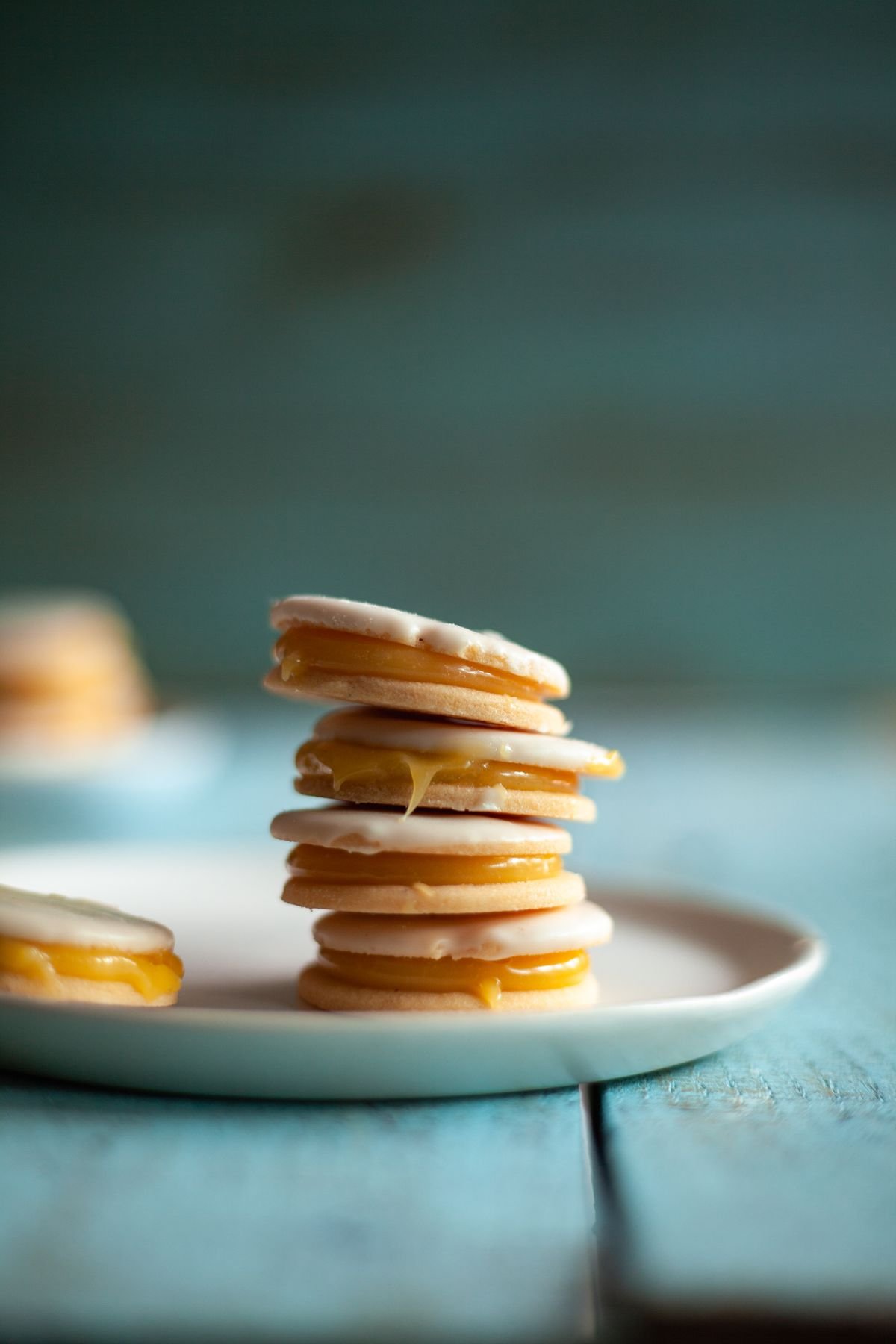
If you are searching for best alfajores near me, you probably want a soft sandwich cookie filled with dulce de leche, the thick caramel that is the heart of Argentine baking. Alfajores are one of Latin America’s most loved sweets: two tender biscuits with a generous layer of dulce de leche between them, sometimes rolled in coconut, sometimes coated in chocolate. This guide explains what the best alfajores near me look like, how to tell a great one from an average one, where to buy them, and how to bake them at home.
Key Takeaways
- The best alfajores near me are soft sandwich cookies filled with dulce de leche, a thick caramel made by slowly cooking sweetened milk. The classic Argentine version uses cornstarch, known as maicena, in the dough.
- Alfajores come in two main styles: alfajores de maicena, pale and crumbly with coconut flakes around the edges, and chocolate alfajores, coated in dark or milk chocolate.
- The best alfajores near me are soft and tender, not hard or crunchy. The biscuits should melt in the mouth, and the dulce de leche should be thick and generous, not thin or runny.
- Alfajores are Argentine and Uruguayan, and they are also found across Latin America, including Chile and Peru. Each country has its own version, but dulce de leche is at the centre of most of them.
- Havanna is the most famous Argentine alfajor brand, founded in Mar del Plata, and its alfajores are a useful benchmark for what a good chocolate alfajor should taste like.
- The best alfajores near me are sold in Latin American bakeries, Argentine cafes and specialist shops in the UK, and they are also easy to bake at home with cornstarch, butter, eggs and a jar of dulce de leche.
- Alfajores de maicena are often gluten free, because the dough is made mostly with cornstarch, but check the recipe, because some versions include wheat flour.
What Are Alfajores?
The best alfajores near me are sandwich cookies, and the filling is the point. Two round biscuits are sandwiched together with dulce de leche, a thick caramel made by heating sweetened milk slowly until it turns golden brown and spoonably thick. The biscuits are soft, pale and crumbly, more like shortbread than a crunchy cookie, and they are made to melt in the mouth rather than to snap. The classic version, alfajores de maicena, uses cornstarch in the dough, which gives the biscuits their delicate, powdery texture, and the edges are rolled in desiccated coconut, which sticks to the dulce de leche that squeezes out of the sides.
The other main style is the chocolate alfajor, in which the sandwich is coated in dark chocolate or milk chocolate, sometimes with a crisp shell and sometimes with a softer coating. Chocolate alfajores are richer and more filling than the maicena version, and they travel better, which is why they are the ones most often sold in boxes and exported. There are many other versions too: some are filled with jam or fruit paste, some are dusted with icing sugar, and some use a honey and almond dough in the older Spanish style, which is a different sweet altogether.
The history of the alfajor goes back a long way. The name comes from the Arabic word al-hasú, meaning stuffed or filled, and the sweet travelled from the Arab world to Spain, where the Spanish alfajor became a dense cake of honey, almonds and spices. Spanish settlers took it to South America, where it changed: the honey and almond filling gave way to dulce de leche, and the biscuit became soft and crumbly. Argentina and Uruguay made it their own, and today the alfajor is a national sweet in both countries, eaten with coffee, sold in every kiosk, and given as a gift. The best alfajores near me carry that history in a small, sweet sandwich.
What Makes the Best Alfajores Near Me?
The best alfajores near me are judged by the biscuit first. The biscuit should be soft, tender and crumbly, with a fine, almost powdery texture that comes from the cornstarch in the dough. It should break easily and melt in the mouth, not crunch like a hard cookie. If the biscuit is dry, hard or stale, the alfajor is not a good one, however good the filling is. A fresh alfajor feels light in the hand, and the biscuit gives way easily when you bite into it.
The dulce de leche is the second test, and it is the most important one. Good dulce de leche is thick, smooth and deeply caramel-flavoured, with a toffee sweetness that is rich but not sickly. It should be spread generously, so there is a visible layer between the biscuits, and it should hold its shape rather than running out of the sides. If the filling is thin, runny or barely there, the alfajor will taste mostly of biscuit, and that is not what an alfajor is for. The best alfajores near me have a thick layer of dulce de leche that you can see and taste in every bite.
The balance between biscuit and filling is the third test. An alfajor should be sweet, but not so sweet that you cannot finish it, and the coconut on a maicena alfajor should add texture and a light flavour without overwhelming the dulce de leche. A chocolate alfajor should have a coating that is thick enough to give a snap when you bite it, but not so thick that it dominates the biscuit and the filling. Freshness matters too: alfajores are at their best within a few days of baking, while the biscuits are still soft, and they go dry and crumbly if they sit too long. The best alfajores near me are fresh, soft and generously filled.
Types of Alfajores and What to Order
The best alfajores near me come in several types, and the best choice depends on whether you want something light, something rich, or something to take home. The table below shows the main types and what each one suits.
| Type | What it is | Best for |
|---|---|---|
| Alfajores de maicena | Pale cornstarch biscuits with dulce de leche, rolled in coconut | A light, classic alfajor with coffee |
| Chocolate alfajores | Sandwich cookies coated in dark or milk chocolate | A richer alfajor, and the best for taking home |
| Alfajores with icing sugar | Maicena biscuits dusted with icing sugar instead of coconut | A simple, old-fashioned alfajor |
| Fruit-filled alfajores | Biscuits filled with quince paste, fig or jam, sometimes with dulce de leche | A lighter, fruitier option |
| Mini alfajores | Small, bite-sized versions of the classic | Sharing, or a lighter portion |
| Havanna-style alfajores | The famous Mar del Plata brand, chocolate-coated with a thick filling | A benchmark for a great chocolate alfajor |
If it is your first time trying alfajores, order the classic maicena version first: two pale biscuits, a thick layer of dulce de leche and coconut around the edges. That tells you everything about the biscuit and the filling. If you like that, try a chocolate alfajor next, which is richer and more filling. The best alfajores near me are usually the simplest ones done well, so do not order the most elaborate version on the menu before you know the basics are right.
How to Find the Best Alfajores Near Me
Finding the best alfajores near me starts with knowing where to look. Latin American bakeries and Argentine cafes are the best places, and the best ones are the ones that bake their own alfajores rather than buying them in. A bakery that also sells empanadas, facturas and medialunas is a good sign, because it suggests a kitchen that bakes Argentine food every day. Specialist Latin American shops and delis also sell alfajores, often in boxes, and they are a good place to find the famous brands.
When you search for best alfajores near me, look at the reviews before you go. The words to look for are soft, fresh, generous dulce de leche and homemade. If many reviews mention that the biscuits were dry, hard or stale, or that there was barely any filling, believe them. Photos help too: a good alfajor shows two pale, soft biscuits with a visible layer of golden dulce de leche between them, and coconut flakes around the edges on a maicena version. If the photos show a thin, dry sandwich with almost no filling, choose somewhere else.
Check what is on offer as well. A place that sells both maicena and chocolate alfajores, and that bakes them in small batches, is usually a place that takes them seriously. A shop that stocks Havanna alfajores is worth trying too, because Havanna is the benchmark for a good chocolate alfajor, and comparing it with a homemade one tells you a lot. The best alfajores near me usually come from a bakery that makes them fresh, not from a place that treats them as an afterthought.
How to Make Alfajores at Home
The best alfajores near me are wonderful, but alfajores are also one of the easiest Latin American sweets to bake at home, because the dough is simple and the filling comes from a jar. For the dough, cream together soft butter and sugar until pale, then beat in egg yolks, a little vanilla and a teaspoon of lemon zest. In a separate bowl, mix cornstarch with a small amount of plain flour and baking powder, then fold the dry ingredients into the butter mixture to make a soft dough. Wrap it and chill it in the fridge for half an hour, so it firms up and is easy to roll.
Roll the dough out to about half a centimetre thick, cut out rounds with a biscuit cutter, and bake them in a moderate oven for about ten minutes, until they are set but still pale. Do not let them brown: maicena biscuits should stay white. Let them cool completely, then spread a generous spoonful of dulce de leche on one biscuit and sandwich another on top, pressing gently so the filling reaches the edges. Roll the edges in desiccated coconut, which will stick to the dulce de leche. Leave them for an hour so the filling sets slightly, and eat them with coffee. For chocolate alfajores, dip the finished sandwiches in melted dark chocolate and leave them to set on a wire rack.
If you cannot find dulce de leche in a jar, you can make it by simmering a sealed tin of sweetened condensed milk in water for a couple of hours, but take care and follow a trusted recipe, because the tin must stay covered with water the whole time. Shop-bought dulce de leche is easier and just as good for alfajores. The best alfajores near me are a guide for what to aim for, but a home version made with soft biscuits and a thick layer of dulce de leche is already very good.
Common Mistakes to Avoid
The most common mistake when searching for best alfajores near me is choosing a place that sells stale alfajores. Alfajores go dry quickly, and a biscuit that has sat on a shelf for weeks will be hard and crumbly rather than soft and tender. If the alfajor feels hard in your hand, or if the biscuit crumbles to dust when you bite it, it is stale, and you should choose somewhere else.
The second mistake is too little filling. An alfajor is a sandwich, and the dulce de leche is the point of it, so a thin smear is not enough. A good alfajor has a visible, generous layer of dulce de leche, and if you cannot see it, the bakery has been stingy. The third mistake is overbaking the biscuits at home. Maicena biscuits should stay pale and soft, so take them out of the oven while they are still white, even if they look underdone, because they firm up as they cool.
The fourth mistake is using runny dulce de leche. If the filling is too thin, it will squeeze out of the sides and make the sandwich soggy, so use a thick dulce de leche that holds its shape. The fifth mistake is storing alfajores badly. Keep them in an airtight container at room temperature and eat them within a few days, because they dry out quickly, and do not put them in the fridge, which makes the biscuits hard.
Best Alfajores Near Me: Quick Facts
| Fact | Detail |
|---|---|
| What they are | Soft sandwich cookies filled with dulce de leche |
| Name origin | From the Arabic al-hasú, meaning stuffed or filled |
| Main ingredients | Cornstarch (maicena), butter, egg yolks, sugar, dulce de leche, coconut flakes |
| Classic style | Alfajores de maicena — pale, crumbly biscuits with dulce de leche and coconut |
| Chocolate style | Sandwich cookies coated in dark or milk chocolate |
| Famous brand | Havanna, founded in Mar del Plata, Argentina |
| Origin | Argentine and Uruguayan, with versions across Latin America |
| Gluten free | Maicena versions are often gluten free, but check the recipe for wheat flour |
| Best eaten | Fresh, within a few days of baking, with coffee |
| Where to find them | Latin American bakeries, Argentine cafes and specialist shops |
Conclusion
The best alfajores near me are simple: two soft biscuits, a thick layer of dulce de leche, and coconut or chocolate to finish. They began in the Arab world, changed in Spain, and became a national sweet in Argentina and Uruguay, but the rule has never changed: soft biscuits, generous filling and freshness. When you look for them, choose a bakery that bakes its own, order the classic maicena version first, and check that the dulce de leche is thick and plentiful. Do that, and an alfajor is one of the most satisfying sweets you can find.
Frequently Asked Questions
What are alfajores made of?
Alfajores are made of two soft biscuits sandwiched together with dulce de leche, a thick caramel made from sweetened milk. The classic Argentine version, alfajores de maicena, uses cornstarch in the dough, which gives the biscuits a soft, crumbly texture, and the edges are rolled in coconut flakes.
Are alfajores gluten free?
Alfajores de maicena are often gluten free, because the dough is made mostly with cornstarch, which contains no gluten. However, some recipes include wheat flour, and chocolate-coated versions may contain gluten, so check the recipe or ask the bakery if you need a gluten-free alfajor.
What does alfajor taste like?
An alfajor tastes soft, sweet and caramel-like. The biscuits are tender and crumbly with a light vanilla flavour, and the dulce de leche in the middle is thick, smooth and toffee-like. A maicena alfajor also has a light coconut flavour around the edges, while a chocolate alfajor is richer and more cocoa-forward.
Where can I buy alfajores in the UK?
The best alfajores near me in the UK are sold in Latin American bakeries, Argentine cafes and specialist Latin American shops and delis, especially in London. Some online shops sell boxed alfajores, including the Havanna brand, and they are also easy to bake at home.
What is the difference between alfajores and macarons?
Alfajores and macarons are both sandwich cookies, but they are very different. Macarons are made from almond flour and egg whites, with a crisp shell and a chewy centre. Alfajores are made from cornstarch and butter, with a soft, crumbly biscuit and a dulce de leche filling.
How long do alfajores last?
Alfajores are best eaten within a few days of baking, while the biscuits are still soft. Keep them in an airtight container at room temperature. They go dry and hard if they sit too long, and the fridge makes the biscuits harder, so do not store them there.
Are alfajores Argentine or Uruguayan?
Both countries claim alfajores, and the sweet is a national favourite in both Argentina and Uruguay. The two versions are very similar, and alfajores are also found in Chile, Peru and across Latin America, each with its own local style.
Can I make alfajores at home?
Yes, and they are easy to bake. Cream butter and sugar, add egg yolks and vanilla, fold in cornstarch and a little flour, chill the dough, cut out rounds and bake until pale. Sandwich the cooled biscuits with a generous layer of dulce de leche and roll the edges in coconut.
For more food guides, restaurant reviews and recipes, visit Smart Visions.
