
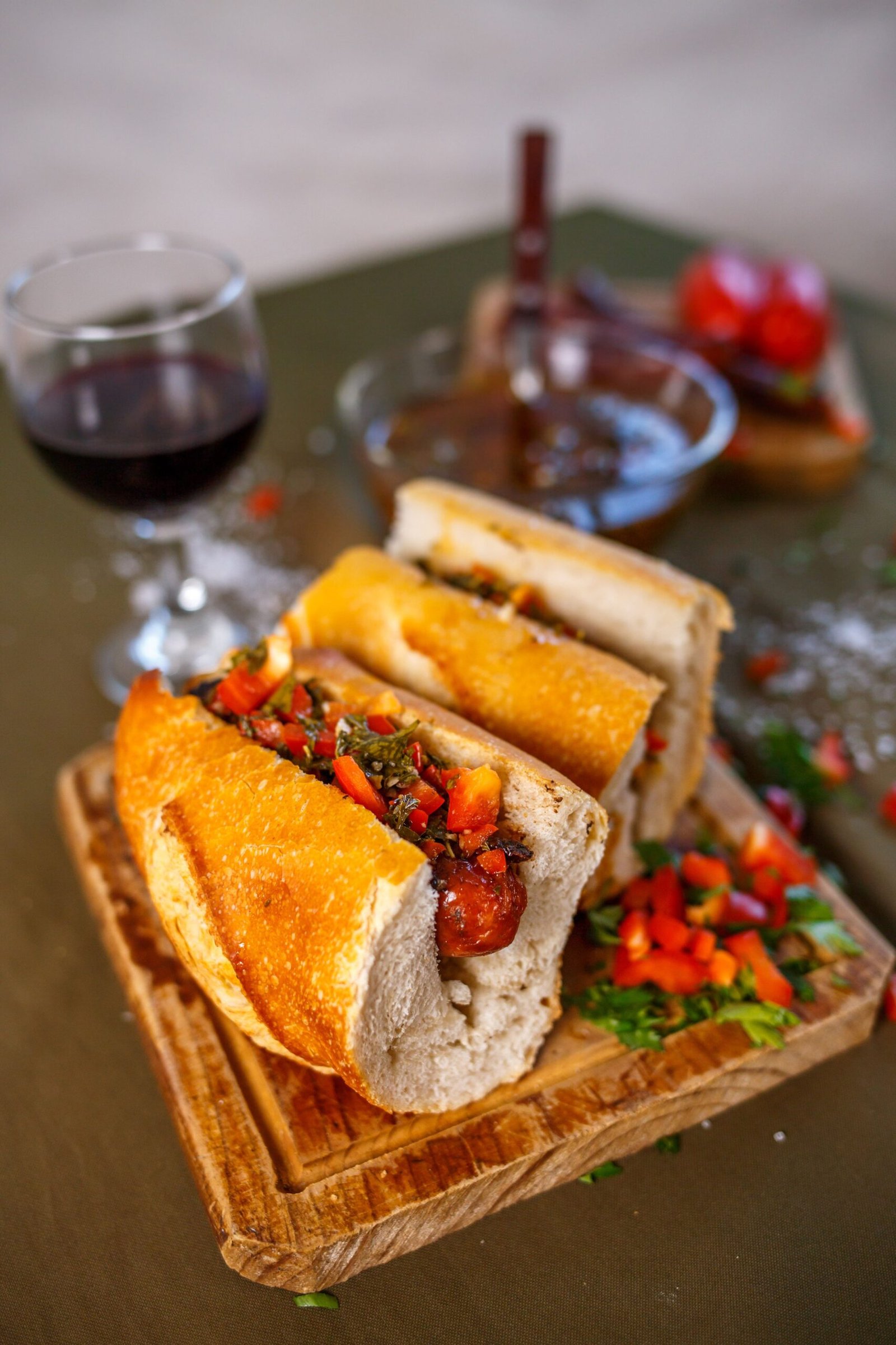
If you have searched for best morcipan near me, you are looking for one of Argentina’s most loved street sandwiches. A morcipán is a grilled morcilla, or blood sausage, served in a crusty bread roll with chimichurri sauce. It is simple, rich and full of flavour, and it is the less famous cousin of the choripán. This guide explains what a morcipán is, what it tastes like, where to find the best morcipan near me, and how to make it at home if no restaurant near you serves it.
What Is a Morcipán?
A morcipán is an Argentine sandwich made from grilled morcilla, a blood sausage, placed inside a crusty French-style bread roll. The name comes from two Spanish words: morcilla, meaning blood sausage, and pan, meaning bread. Put them together and you get morcipán, just as chorizo and pan make choripán.
The build is simple: the morcilla is grilled, put into the roll, and topped with chimichurri, the sharp green herb sauce Argentina is known for. Some versions add salsa criolla, a relish of chopped tomato, onion and pepper.
Morcipán is street food and barbecue food at the same time. In Argentina you will find it at street stalls, at neighbourhood parrillas (grill restaurants), and at the asado, the Argentine barbecue. It is often one of the first things served, while the main cuts are still cooking.
The choripán travelled the world first. The morcipán stayed closer to home, which is why a search for best morcipan near me often brings up fewer results than a search for choripán. That is starting to change as Argentine food grows more popular.
What Is Morcilla?
Morcilla is a blood sausage made from pork blood, fat and a filler, seasoned and cooked. It is a traditional food in Spain and across Latin America, and each region makes its own version.
Morcilla is very different from firm sausages. When heated, it becomes soft, rich and almost spreadable, without the firm, coarse bite of chorizo. The flavour is deep and savoury, and Argentine morcilla is frequently slightly sweet, sometimes with raisins, nuts or spices.
Because morcilla is already cooked, grilling only heats it through and crisps the casing, while the inside stays soft and rich. That is why a morcipán needs only a short time on the grill, and why the bread and sauce matter: the crusty roll holds the soft sausage together, and the sharp sauce cuts the richness.
Morcipán vs Choripán
The morcipán and the choripán are built in exactly the same way, and the only real difference is the sausage inside. A choripán uses chorizo, a firm pork sausage, while a morcipán uses morcilla, a soft blood sausage. Both are grilled, both go into a crusty bread roll, and both are topped with chimichurri.
The eating experience is different, though. Chorizo is firm and coarse, with a strong, spicy flavour. Morcilla is soft and rich, almost spreadable when hot. The choripán is the bolder sandwich; the morcipán is the softer, richer one.
At an Argentine asado, both are served side by side, grilled at the same fires and sold at the same stalls. Many choripán fans have never tried morcipán, simply because it is not listed on the menu. If you already like choripán, the best morcipan near me search is the natural next step.
What Does Morcipán Taste Like?
A morcipán tastes rich, savoury and warm, with a soft texture very different from a normal sausage sandwich. The morcilla is mild in spice but deep in flavour, not hot or fiery. The sweetness in Argentine morcilla is gentle, more a background note than a strong flavour.
The chimichurri is what makes the sandwich work. Chimichurri is made from parsley, garlic, oregano, vinegar, oil and chilli flakes. It is sharp, herby and slightly sour, and that sharpness balances the rich, slightly sweet sausage. Without the sauce, the morcipán would be too rich. With it, the flavours sit in balance: soft and rich from the sausage, fresh and sharp from the sauce, and warm and crusty from the bread.
Salsa criolla, when served, adds freshness and crunch. It is a chopped relish of tomato, onion and pepper. The bread matters too: a crusty French-style roll holds its shape against the soft sausage and wet sauce, while a soft roll would fall apart. That balance of rich, sharp and crusty is what people remember after finding the best morcipan near me.
Where to Find the Best Morcipan Near Me
Finding the best morcipan near me starts with knowing where to look. The best place is an Argentine parrilla, a grill restaurant, or any restaurant serving Argentine barbecue, where morcilla is a standard item.
A useful trick is to search for choripán instead. Restaurants that serve choripán very often serve morcipán too, even when it is not listed. The two sandwiches are made the same way, so a kitchen with morcilla for its asado will usually make a morcipán if you ask. Asking is often the fastest way to find the best morcipan near me.
When you check a restaurant, look for signs it takes its Argentine grill seriously: a charcoal or wood grill, a menu with asado cuts and achuras (offal and sausages served at the start of the barbecue), and chimichurri on the table.
El Gauchito in Rockville Centre, New York, lists a “Black Sausage Sandwich (Morcipan)” on its menu, described as a savoury black sausage served on a sandwich. The name may be translated, but the sandwich is the same.
If there is no Argentine restaurant near you, do not give up. Spanish and Latin American restaurants sometimes carry morcilla, and butcher shops that sell Spanish or Latin American products are another place to ask. If they stock morcilla, you are halfway to a morcipán at home. When you search for the best morcipan near me online, check recent reviews and photos, not just the menu.
How to Make Morcipán at Home
If you cannot find the best morcipan near me at a restaurant, making it at home is simple. You will need morcilla, crusty French-style bread rolls, and the ingredients for chimichurri: fresh parsley, garlic, dried oregano, red wine vinegar, olive oil and chilli flakes. If you like, you can also make salsa criolla from chopped tomato, onion and pepper.
Start with the chimichurri, because it tastes better after sitting a little. Finely chop the parsley and garlic, then mix them with the oregano, vinegar, olive oil and a pinch of chilli flakes. The sauce should be loose and spoonable, not a paste. Add salt, taste it, and set it aside.
Heat a grill or heavy frying pan over medium-high heat. Cook the morcilla for a few minutes on each side, just until it is heated through and the casing is crisp. Because the sausage is already cooked, you are only warming it. Do not overcook it, or the soft filling can burst out of the casing.
While the morcilla is on the grill, cut the bread rolls open and warm them on the grill as well, cut side down, until they are lightly toasted. This step matters: a warm, crisp roll holds the sandwich together and tastes much better than a cold one.
To build the sandwich, put the grilled morcilla into the roll and spoon over a generous amount of chimichurri, plus salsa criolla if you made it. Serve it straight away, while the sausage is hot and the bread is crisp. A homemade morcipán can be just as good as the best morcipan near me at a restaurant, and you control the balance.
How to Eat Morcipán Like an Argentine
In Argentina, the morcipán is the opening of the asado, not the main event. The asado begins with achuras, the offal and sausages, served while the main cuts are still cooking. The morcipán is part of that first round: a hot sandwich eaten standing around the grill.
If your search for the best morcipan near me leads you to a parrilla, order it as a starter. One sandwich is filling, and it gives you a real taste of the grill.
Is Morcipán for Everyone?
Honestly, no. Morcipán is made from blood sausage, and that is an acquired taste. Some people love it from the first bite. Others cannot get past the idea of it, even before tasting it. Both reactions are fair, and there is no right answer.
If you are unsure, it helps to know what you are actually tasting. Morcilla is mild, rich and slightly sweet, not strong or bitter. Most of the surprise is the soft, spreadable texture, very different from a normal sausage.
Check before you order if you have dietary restrictions: morcilla is made from pork blood, fat and filler, so it is not suitable for vegetarians or people who do not eat pork, and the roll may contain gluten.
If you try it and do not like it, the choripán is the obvious alternative: the same sandwich with chorizo instead of morcilla. There is no rule that says you must like morcipán to enjoy Argentine food.
Tips for Your First Morcipán
If this is your first morcipán, a few simple tips will help you enjoy the best morcipan near me on your first try. First, eat it hot and fresh. Second, do not skip the chimichurri: it balances the rich sausage. Third, ask questions. If a menu lists choripán but not morcipán, ask whether the kitchen can make one. Fourth, start with one sandwich. Fifth, buy good morcilla from a butcher or a Latin American food shop, and use a proper crusty roll.
What is a morcipán?
A morcipán is an Argentine sandwich of grilled morcilla, a blood sausage, in a crusty French-style bread roll with chimichurri sauce. The name combines “morcilla” and “pan”, the Spanish word for bread. It is built like a choripán, but with morcilla instead of chorizo.
What is morcilla made of?
Morcilla is a blood sausage made from pork blood, fat and a filler, seasoned and cooked. Argentine morcilla is frequently slightly sweet, sometimes with raisins, nuts or spices. When heated, it becomes soft, rich and almost spreadable, which is why the best morcipan near me tastes so different from a normal sausage sandwich.
Is morcipán the same as choripán?
No. Both are built the same way, with the same bread and chimichurri, but the sausage is different. A choripán uses chorizo, a firm pork sausage; a morcipán uses morcilla, a soft blood sausage. The morcipán is richer and softer, the choripán firmer and spicier.
Where can I find the best morcipan near me?
The best morcipan near me is usually found at an Argentine parrilla or grill restaurant. Restaurants that serve choripán often serve morcipán too, even when it is not listed, so ask. You can also buy morcilla at Latin American butcher shops and make the sandwich at home.
Can I make morcipán at home?
Yes, and it is simple. If you cannot find the best morcipan near me at a restaurant, grill the morcilla for a few minutes on each side until heated through and crisp, warm a crusty bread roll on the grill, and add chimichurri. Because morcilla is already cooked, you are only heating it.
What sauce goes on a morcipán?
Chimichurri is the main sauce, and it is essential. Made from parsley, garlic, oregano, vinegar, oil and chilli flakes, its sharp flavour balances the rich, slightly sweet sausage. Some versions also add salsa criolla, a relish of chopped tomato, onion and pepper.
Does morcipán taste like a regular sausage?
No, it tastes quite different. Morcilla is soft, rich and almost spreadable when hot, with a deep, savoury flavour and often a slight sweetness. A regular sausage is firm and coarse by comparison. With chimichurri and crusty bread, the sandwich is rich but balanced.
Is morcipán suitable for everyone?
Not for everyone. Morcipán is an acquired taste, and blood sausage is not something every person enjoys. It is made from pork blood, fat and filler, so it is not suitable for vegetarians or for people who do not eat pork. If unsure, the choripán is a good alternative.
A morcipán is a simple sandwich, but it carries a whole food culture with it: the asado, the parrilla, the grill and the chimichurri. Whether you find the best morcipan near me at an Argentine restaurant or make it at home, eat it hot, fresh and with plenty of sauce. For more food guides, recipes and restaurant ideas, visit Smart Visions.
