
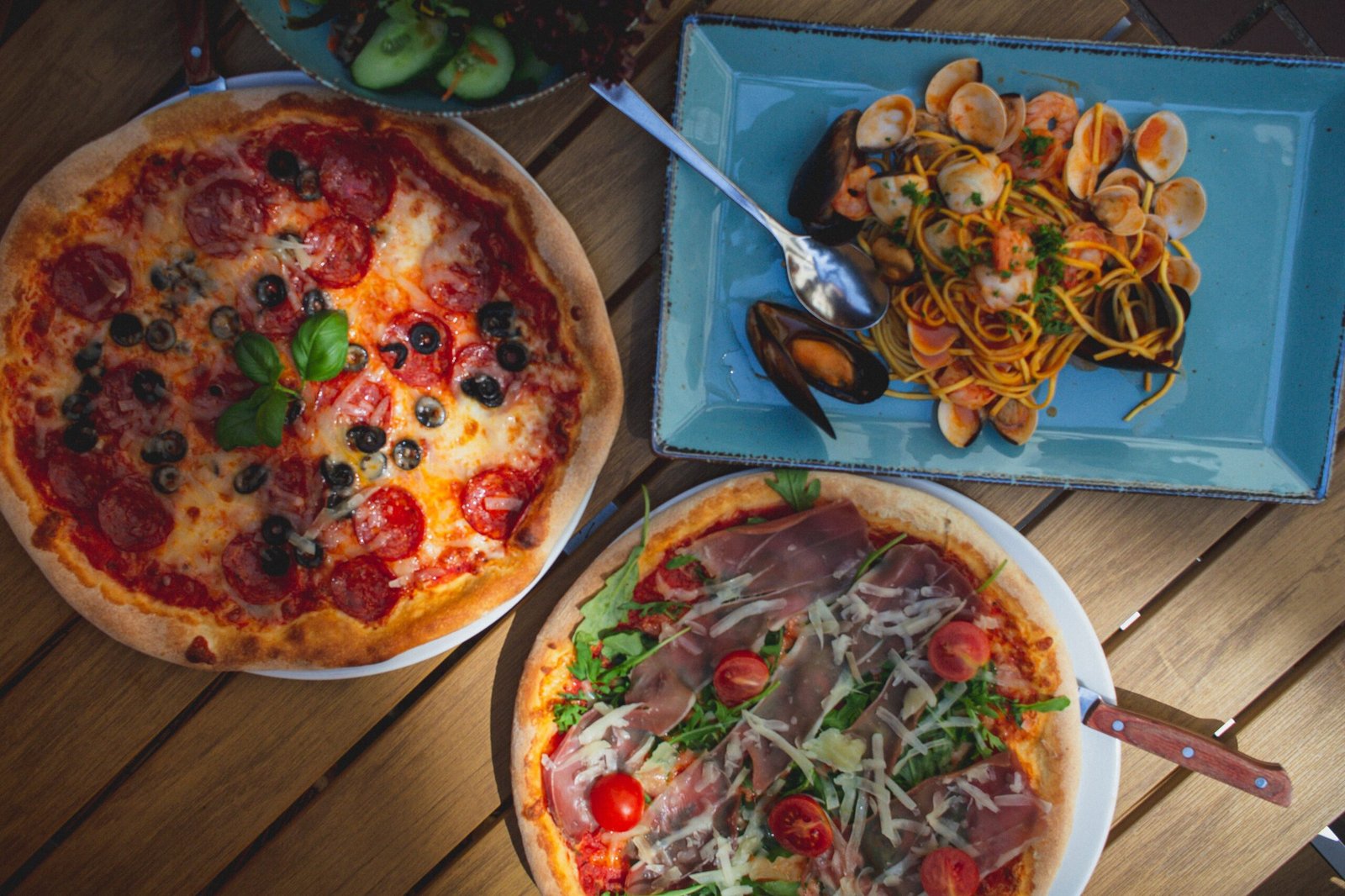
If you are searching for the best Italian restaurants near me, here is the short answer: the best ones serve fresh handmade pasta, cook pizza in a wood-fired oven, keep a short seasonal menu, and focus on the food of one Italian region. You will know you have found a good one when the menu is small, the pasta is made in-house, and the wine list is Italian. This guide explains how to spot the best Italian restaurants near me, what to order, and what to avoid.
What Makes an Italian Restaurant Authentic?
Authenticity is not about white tablecloths or a menu written in Italian. It is about how the food is made and where the ingredients come from.
The first sign is the menu. Real Italian restaurants keep their menus short and seasonal. A menu with fifty dishes is a warning sign: no small kitchen can cook that many dishes well. A short menu means the kitchen buys fresh ingredients and cooks what is in season.
The second sign is the pasta. The best Italian restaurants near me make their pasta fresh, by hand, in the restaurant. Fresh pasta is soft and slightly chewy. Look for hand-rolled pappardelle, stuffed ravioli, orecchiette, or trofie.
The third sign is the ingredients. Italian cooking depends on a few excellent ingredients, such as San Marzano tomatoes, Parmigiano-Reggiano, and buffalo mozzarella. Imported Italian ingredients cost more, but they are what make the food taste Italian rather than simply Italian-style.
How to Find the Best Italian Restaurants Near Me
Start with the menu, which most restaurants publish online. A good menu is short, seasonal, and regionally focused, naming dishes such as Ligurian pesto and Roman carbonara. A menu listing the same generic dishes as every other restaurant is not a good sign.
Next, read recent reviews properly. Look for reviews that name specific dishes, not just “great food”. A review saying the tagliatelle was silky or the carbonara had no cream tells you far more than a five-star rating. Reviews that praise the food by name are the best clue you have found one of the best Italian restaurants near me.
Ask around, too. Italian delis and food shops often know where the real cooking happens, and Italian-speaking staff or owners are a good sign, though not a guarantee. Finally, check the wine list for Italian wines such as Chianti, Barolo, and Prosecco.
Pizza Napoletana: The Real Test
Pizza is the fastest way to judge an Italian restaurant, because the rules for real Neapolitan pizza are written down. Pizza Napoletana is protected by the Associazione Verace Pizza Napoletana (AVPN), founded in Naples in 1984, and UNESCO listed the pizzaiolo’s craft as Intangible Cultural Heritage in 2017.
A true pizza Napoletana uses Tipo 00 flour, water, salt, and natural yeast only. The dough is hand-stretched, never rolled, to no more than 35 centimetres across, then cooked in a wood-fired oven at 430 to 480 degrees Celsius for just 60 to 90 seconds. Gas ovens are not permitted under AVPN rules. The result is a thin centre and a puffy, leopard-spotted crust called the cornicione.
The toppings are just as strict. A Margherita uses San Marzano tomatoes, fior di latte or buffalo mozzarella DOP, basil, and olive oil. A Marinara has no cheese: San Marzano tomato, garlic, oregano, and olive oil. San Marzano DOP tomatoes are sweeter and less acidic than ordinary tomatoes. When you are judging the best Italian restaurants near me, look for a visible wood-fired oven, a short pizza list, and a crust with dark blistered spots. A pale, stiff, or overloaded pizza is not Neapolitan pizza, whatever the menu claims.
Fresh Pasta: The Heart of the Kitchen
Pasta is where an Italian restaurant shows its skill. Good dried pasta from Italy is an excellent product, but fresh handmade pasta is the mark of a kitchen that takes its craft seriously. Fresh pasta is made from flour and eggs, rolled thin, and shaped by hand, and it cooks in two to three minutes. Regions have their own shapes: tagliatelle, orecchiette, trofie, pappardelle.
The sauce matters as much as the pasta. In Italy, the pasta is the star and the sauce is the support: a good sauce coats the pasta lightly and never drowns it. If your plate arrives swimming in sauce, the kitchen is hiding something. The best Italian restaurants near me serve pasta where you can taste the pasta itself.
The Carbonara Test and Other Dishes to Try
If you want one dish that separates real Italian cooking from imitation at the best Italian restaurants near me, order the carbonara. A real carbonara contains only egg, pecorino Romano, guanciale (cured pork cheek), and black pepper. There is no cream in carbonara, no garlic, and no peas. The sauce is made by the heat of the pasta itself, which turns the egg and cheese into a silky coating. If a menu lists cream in its carbonara, the kitchen is not cooking Italian food properly.
Other dishes will tell you a lot about a restaurant. Risotto should be creamy and loose, with the rice still firm in the middle; it takes about twenty minutes to cook, so a five-minute risotto is reheated. Osso buco should be tender enough to cut with a spoon. Burrata should arrive whole and fresh, with good bread and olive oil. A real tiramisu is light, and cannoli should be filled to order so the shell stays crisp.
Understanding the Menu: Antipasti, Primi, Secondi, Dolci
An Italian meal is built in courses, and understanding them helps you order well at the best Italian restaurants near me.
Antipasti are starters — cured meats, cheeses, olives, bruschetta, or salad — meant to wake up your appetite, not fill you up. Primi are first courses — usually pasta, risotto, or soup — and the course that matters most. Secondi are mains of meat or fish, served with a contorno of vegetables or potatoes. Dolci are desserts, worth saving room for, because a proper Italian meal ends with something sweet and an espresso.
Trattoria, Osteria, and Ristorante: What’s the Difference?
When you search for the best Italian restaurants near me, you will see three words again and again: trattoria, osteria, and ristorante. They once meant very different things.
A trattoria is a family-run, casual restaurant serving traditional regional cooking. The menu is short, seasonal, and often handwritten. Prices are moderate and portions generous. If you want a real home-style Italian meal, a trattoria is usually the best choice among the best Italian restaurants near me.
An osteria began as a wine tavern, where guests drank wine from the cask and sometimes brought their own food. Today it is a casual restaurant with a strong focus on wine and simple regional dishes, a short menu, and traditional cooking, sometimes with a modern twist. The Slow Food guide Osterie d’Italia lists the best ones.
A ristorante is the most formal of the three, with full table service, a longer menu, a proper wine list, often with a sommelier, and higher prices. One warning: the name on the door is a clue, not a contract. Italian law treats all three the same, so nothing stops a tourist trap from calling itself a trattoria. Judge the menu, not the sign.
What to Order: A First-Timer’s Guide
If you are visiting one of the best Italian restaurants near me for the first time, start with an antipasto to share, such as burrata or cured meats. Then order a primo each, choosing different pastas so you can taste more of the kitchen. A handmade tagliatelle and a carbonara will tell you everything.
For the secondo, order something you cannot easily cook at home: osso buco, a whole grilled fish, or a slow-braised dish. Skip the chicken breast. Share a contorno, such as roasted potatoes or grilled vegetables. Leave room for dolci: tiramisu is the classic test and should taste of coffee and mascarpone, not sugar. If you are unsure, ask the staff.
Red Flags: How to Spot a Tourist Trap
When you are hunting for the best Italian restaurants near me, watch for red flags. A menu with photographs of the food is almost always a bad sign. A menu listing dishes from every region of Italy, plus pizza, burgers, and sushi, is a kitchen with no identity. Be wary of tourist-heavy spots where staff outside pull you in; good Italian restaurants rarely need to. A menu with no prices outside, or prices far above the area, is another warning. And if the bread is stale, the olive oil tastes cheap, or the Parmesan comes from a shaker, leave.
What Do Italian Restaurants Cost?
Prices vary widely by city and neighbourhood, so there is no single figure to expect. In general, the best Italian restaurants near me will charge noticeably less at a trattoria or osteria than at a formal ristorante, and a pizzeria costs less than either. A pizza and a drink at the best Italian restaurants near me is usually the cheapest way to eat well, while a full three-course meal with wine at a ristorante costs several times more. Many restaurants charge a small cover charge, called the coperto, for bread and table service, and wine by the glass is usually good value.
Frequently Asked Questions
What is the best way to find the best Italian restaurants near me?
The best Italian restaurants near me are usually found by reading the menu first, then checking recent reviews that name specific dishes. Look for a short seasonal menu, fresh handmade pasta, a wood-fired oven, and an Italian wine list.
What should I order at an Italian restaurant for the first time?
Start with an antipasto to share, then a primo each, choosing different pastas. A handmade tagliatelle and a real carbonara are good tests. For a secondo, order something you cannot easily cook at home, such as osso buco. Leave room for tiramisu.
Does real carbonara have cream in it?
No. A real carbonara contains only egg, pecorino Romano, guanciale, and black pepper — no cream, no garlic, no peas. The sauce is made by the heat of the pasta, which turns the egg and cheese into a silky coating.
What is the difference between a trattoria, an osteria, and a ristorante?
A trattoria is a casual, family-run restaurant serving traditional regional cooking at moderate prices. An osteria began as a wine tavern and today is a casual place with a strong wine list. A ristorante is the most formal option, with full table service and higher prices. The name is a clue, not a guarantee.
What makes a pizza truly Neapolitan?
A true pizza Napoletana follows the AVPN rules: Tipo 00 flour, water, salt, and natural yeast only, hand-stretched to no more than 35 centimetres, and cooked in a wood-fired oven at 430 to 480 degrees Celsius for 60 to 90 seconds. It uses San Marzano tomatoes and fior di latte or buffalo mozzarella DOP.
Are Italian restaurants good for vegetarians?
Yes. Italian food is very vegetarian-friendly, built on vegetables, cheese, and pasta. Most menus offer several vegetarian primi, such as pasta with tomato and basil or mushroom risotto. Vegan and gluten-free options are improving, but ask in advance.
How much does a meal at an Italian restaurant cost?
It varies widely by city and type of restaurant. A pizza and a drink at a good pizzeria is usually the cheapest way to eat well. A trattoria costs noticeably less than a formal ristorante, and a full three-course meal with wine at one of the best Italian restaurants near me will cost several times more.
What is the best Italian dish to try?
A handmade pasta is usually the safest choice, because it shows the kitchen’s skill directly. A real carbonara, a proper risotto, or a pizza Napoletana will each tell you whether the restaurant cooks Italian food properly.
Conclusion
The best Italian restaurants near me are not the ones with the longest menus or the flashiest dining rooms. They are the kitchens that make their own pasta, fire their pizza in a wood oven, and cook the food of one region properly. Use the tests in this guide and you will find the best Italian restaurants near me. For more recipes, food guides, and restaurant ideas, visit Smart Visions.
