
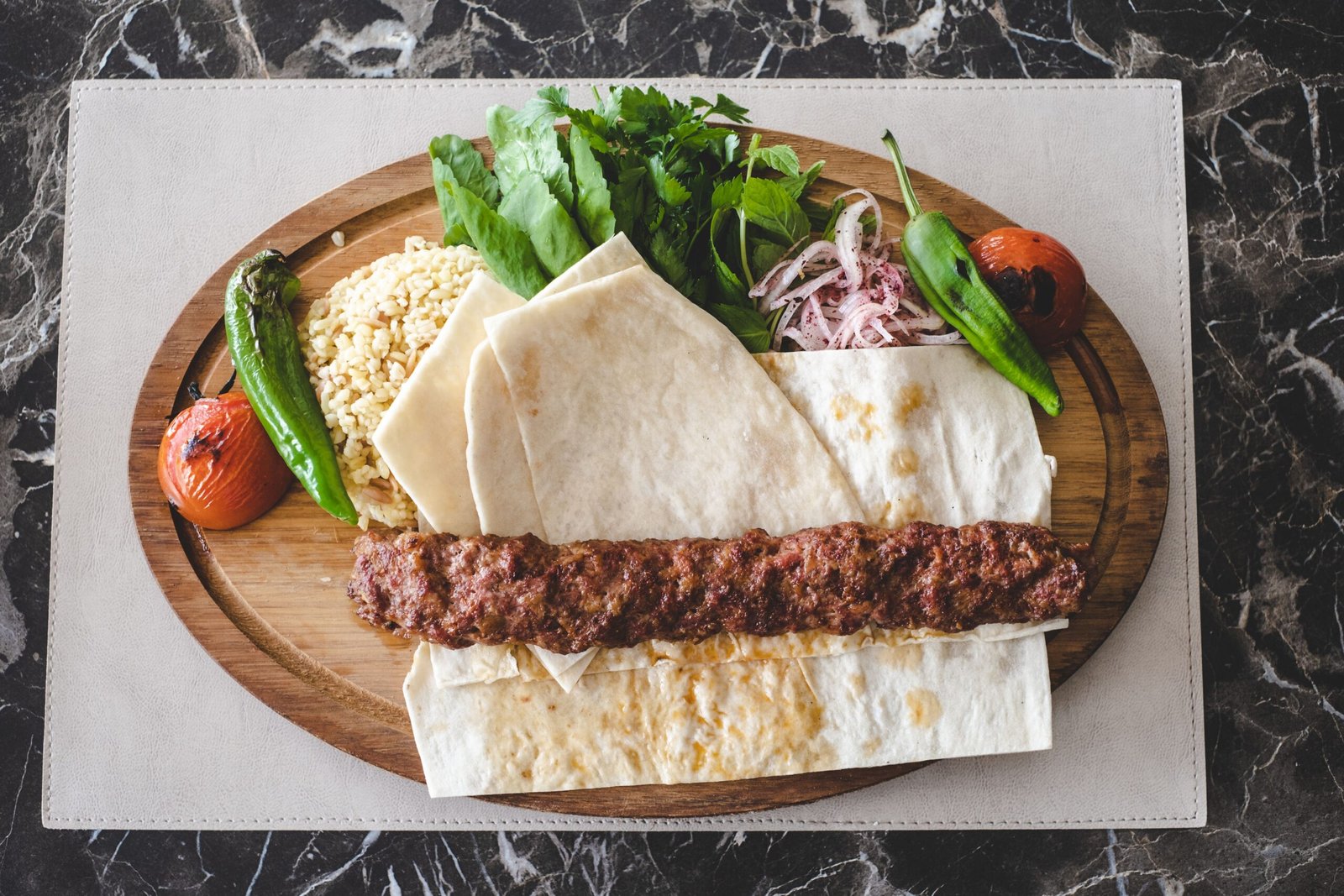
If you are searching for halal restaurants near me, the short answer is this: a halal restaurant is one that serves food prepared according to Islamic dietary law — no pork, no alcohol, and meat from animals slaughtered in the prescribed halal way. The best halal restaurants near me are usually easy to spot because they display a halal certificate, label halal dishes clearly on the menu, and are happy to answer questions about where their meat comes from. This guide explains what halal means, how certification works in the UK, how to check a restaurant before you eat there, and which cuisines to try first.
What Does Halal Mean?
Halal is an Arabic word meaning lawful or permitted under Islamic law. Its opposite is haram, meaning forbidden. Halal is not a type of cuisine and it is not a flavour. It describes how food is sourced, prepared and handled, rather than where a recipe comes from. A Turkish kebab can be halal or not, depending on the meat and how it was prepared. A plain vegetable curry can be halal as long as it contains no haram ingredients and was not cooked with pork fat, lard or alcohol.
The basic dietary rules come from the Quran and from the Sunnah, the teachings and practices of the Prophet Muhammad. The Quran prohibits dead animals, blood, the flesh of swine, meat dedicated to anyone other than Allah, and intoxicating drinks. That means the rules reach further than simply avoiding a pork chop: they also cover pork derivatives such as lard and pig gelatin, blood, alcohol used in cooking, and meat from animals not slaughtered in the prescribed way. Most unprocessed fruits, vegetables, grains, legumes and nuts are naturally halal.
For Muslims, eating halal is a matter of faith, not preference. That is why the question behind a search for halal restaurants near me is usually a serious one: the person searching wants to eat with confidence, not just to find a restaurant that uses the word halal on its sign.
What Makes a Restaurant Halal?
When you are judging halal restaurants near me, a restaurant counts as halal when everything it serves follows Islamic dietary rules. That covers four main areas, and a good halal restaurant takes all four seriously.
First, the meat. For meat to be halal, the animal must be slaughtered in the prescribed way, known as dhabihah or zabiha. The animal must be a permitted species — cattle, sheep, goats, chickens and similar animals — and it must be alive and healthy at the time of slaughter. The slaughter is carried out by a trained Muslim slaughterman using a sharp blade to cut the throat, windpipe and blood vessels in the neck in a single motion, while invoking the name of Allah, usually by saying Bismillah, meaning “in the name of God”. The blood is then allowed to drain, because the consumption of blood is prohibited.
Second, no pork. Pork and all pork products are forbidden, including lard, pork-based stock, pork gelatin and sausages or pepperoni made from pork. A halal kitchen does not cook with any of these, and it does not use the same equipment for pork and halal food.
Third, no alcohol. Alcoholic drinks are prohibited, and alcohol used as an ingredient in cooking — wine in a sauce, beer in a batter, spirits in a dessert — is also a problem, even when the dish has been cooked. A fully halal restaurant does not serve alcohol at all, and many certification schemes require that.
Fourth, no cross-contamination. Halal food must be kept separate from haram food during storage, preparation and cooking. That means separate fryers, grills, chopping boards and utensils where a kitchen also handles non-halal food, and careful handling of ingredients at every step.
Seafood is a special case. Most Islamic scholars consider fish and other seafood halal without the slaughter requirement, although there are some differences of opinion between schools of thought about shellfish.
Halal Certification in the UK: HMC and HFA
The UK has no single government-mandated halal authority and no legal definition of the word halal. Instead, a number of private and community organisations run their own certification schemes, each setting its own standards based on their interpretation of Islamic law. Certification is voluntary, but for a restaurant it is the main way to prove its halal claim to customers. The two largest and most widely recognised certifiers in the UK are the Halal Monitoring Committee (HMC) and the Halal Food Authority (HFA), and knowing the difference between them helps when you are choosing where to eat.
HMC, the Halal Monitoring Committee, was founded in 2003 to provide a stricter alternative to existing schemes. HMC requires hand slaughter without any pre-slaughter stunning, for poultry as well as other animals. Every animal must be killed by a trained Muslim slaughterman, and HMC monitors are present during slaughter — that is the “monitoring” in its name. HMC also bans alcohol on certified premises, requires dedicated equipment that is never shared with non-halal food, and runs unannounced inspections. HMC is supported by over 600 mosques across the UK, and it is the standard most trusted by stricter observant diners. When a restaurant says it is HMC certified, that is a strong claim.
HFA, the Halal Food Authority, was founded in 1994 and is the older of the two bodies, with a broader reach across the mainstream food industry. HFA permits reversible electrical stunning for poultry and sheep, under controlled conditions designed to leave the animal alive at the time of slaughter, and it requires hand slaughter by a Muslim slaughterman. HFA certification is recognised internationally, including by JAKIM in Malaysia and MUI in Indonesia. Its broader standard is why more mainstream suppliers and national chains use HFA, and it is accepted by a broad base of UK Muslim consumers.
Neither body is “wrong” — they reflect different scholarly positions on stunning, the main question dividing Muslim food scholars. Some diners accept either certificate, while others will only eat at HMC-certified restaurants.
One thing to remember when you search for halal restaurants near me is that certification is checked at the level of the individual restaurant, not the brand. Some national chains offer halal food at selected branches, while other branches of the same chain are not halal at all. Always verify the specific branch you plan to visit, never the brand as a whole.
How to Check a Restaurant Is Really Halal
Anyone can put the word halal on a sign, so checking matters. Here is how to verify before you order at any of the halal restaurants near me you are considering.
Look for the certificate. A certified restaurant usually displays its halal certificate on the wall or near the till, showing the name of the certifying body, the certificate number and the expiry date. If you cannot see one, ask to see it. A genuine halal restaurant will show it without hesitation. You can also check whether the certificate is current, because certification has to be renewed.
Check the certifier’s directory. The HMC website lists HMC-certified businesses, and you can search it by postcode. That is a useful check before you travel to a new place, and it is one of the fastest ways to find halal restaurants near me that carry the stricter standard. Other directories and apps also list halal restaurants, but the certifier’s own list is the most reliable source.
Ask the staff. A few direct questions tell you a lot: who certifies your meat, is all the meat on the menu halal or only some dishes, and do you serve alcohol? If the staff answer clearly and confidently, that is a good sign. If they are vague, defensive or unsure, take that as a warning. In a fully halal restaurant, every meat dish is halal. In a mixed restaurant, only some dishes may be halal, and the menu should say which ones.
Read the menu. Halal restaurants usually label halal chicken, beef and lamb on the menu, and many mark the whole menu as halal. Look for the HMC or HFA logo on the menu or the website. If a menu says “halal” without naming a certifier, ask which body certifies it.
Check reviews from Muslim diners. Reviews that mention halal certification by name are more useful than a star rating alone, and community groups and local mosque noticeboards are also good sources of recommendations.
Cuisines to Try at Halal Restaurants
The halal restaurants near me cover a wide range of cuisines, because Muslim communities come from many parts of the world. Here are the ones you are most likely to find.
Turkish restaurants are a common first stop. Expect charcoal-grilled kebabs, doner, shish and Adana kebabs, pide (Turkish flatbread with toppings), lentil soup, and grilled lamb chops. Turkish restaurants are often fully halal and family-friendly, and many serve no alcohol.
Pakistani restaurants are another mainstay of the UK halal scene. Expect curries such as chicken karahi, lamb bhuna and dal, tandoori chicken and naan bread baked in a clay oven, biryani, and grilled kebabs. Pakistani restaurants are common in cities such as Bradford, Birmingham, Manchester and London.
Bangladeshi restaurants, often described as Indian restaurants in the UK, serve a similar range: curries, biryanis, tandoori dishes and naan. Many are fully halal.
Middle Eastern and Lebanese restaurants serve shawarma, falafel, hummus, tabbouleh, grilled meats, mixed grills and flatbreads. Lebanese food is a good choice for groups, because the meze style of small shared plates suits everyone, including vegetarians.
Malaysian restaurants are less common but worth seeking out. Expect rendang (slow-cooked beef in coconut and spices), satay skewers with peanut sauce, nasi lemak, laksa noodle soup, and roti.
North African restaurants, especially Moroccan and Algerian, serve tagines (slow-cooked stews in a clay pot), couscous, pastilla, harira soup and grilled meats.
Dishes Worth Trying First
If you are new to halal restaurants near me, a few dishes are safe and satisfying first orders. A mixed grill gives you a taste of several meats at once — usually chicken, lamb and kebab — served with rice, salad and bread. Chicken karahi or lamb bhuna with naan is a good introduction to Pakistani cooking. A doner or shish kebab with salad and bread is a simple, filling choice at a Turkish restaurant. Shawarma in a wrap is a good lunch option at a Middle Eastern restaurant. Biryani, a spiced rice dish layered with meat or vegetables, is a complete meal on its own.
For vegetarians, the halal restaurants near me are often a good choice. Falafel, hummus, lentil soup, dal, vegetable curries and salads are widely available, and because the kitchen already works to halal standards, cross-contamination with pork is not a concern. Vegans should still ask about ghee, butter and yoghurt, which appear in many dishes.
For dessert, look for baklava, kunafa, gulab jamun, kheer (rice pudding) or Turkish delight — usually made without alcohol, though it is still worth checking.
What to Ask Before You Order
A short list of questions will help you eat with confidence at any of the halal restaurants near me you are considering. Is all the meat halal, or only some dishes? Who certifies your meat — HMC, HFA or another body? Do you serve alcohol on the premises? Is the chicken halal as well as the lamb and beef? Are the desserts alcohol-free? If you have allergies, ask about nuts, gluten and dairy in the usual way, because halal certification does not cover allergens.
Staff at a genuine halal restaurant hear these questions every day and welcome them. If a restaurant cannot answer, or if the answer changes depending on who you ask, choose somewhere else.
How to Find Halal Restaurants Near Me
Start with a map search for halal restaurants near me, then filter the results. Look for restaurants that name their certifier on their website or Google listing, and read recent reviews from Muslim diners. Cross-check any restaurant that interests you against the HMC directory or the certifier it claims, and look at photos of the menu to see whether halal dishes are labelled.
Local knowledge helps a lot. Ask at a mosque, a halal butcher or a Muslim grocery shop — staff there usually know the trusted halal restaurants near me in the area, including which ones are HMC certified. Community groups on social media also share recommendations, and they are often quicker than review sites at flagging a restaurant that has lost its certification.
When you travel, the same checks apply. Halal restaurants are concentrated in cities with large Muslim communities, such as London, Birmingham, Bradford, Manchester, Leicester and Luton, but most towns now have at least one halal option. Always check the specific branch, and call ahead if you are unsure.
Delivery and takeaway need the same care. If you order from halal restaurants near me through a delivery app, check the restaurant’s own listing first, because apps do not always verify halal claims. Order directly from the restaurant where possible, and ask the same questions about certification.
Common Mistakes to Avoid
The most common mistake is assuming that a restaurant is halal because it serves Turkish, Pakistani or Middle Eastern food. Cuisine is not certification, and the best halal restaurants near me prove it with a certificate rather than a style of cooking. A Turkish restaurant can serve non-halal meat, and a Middle Eastern dish made with non-halal meat is not halal. Always check the certificate, not the cuisine.
The second mistake is assuming that a whole chain is halal because one branch is. Halal status is decided branch by branch, and a chain can have halal and non-halal branches in the same city.
The third mistake is assuming that “no pork” means halal. A restaurant can serve no pork and still use non-halal meat or alcohol in its cooking. Halal covers the meat, the ingredients and the preparation, not just the absence of pork.
The fourth mistake is not asking about alcohol. A restaurant can be halal in its meat and still serve wine or beer, which matters to many diners, especially those who want an HMC-certified meal. Ask before you sit down.
Frequently Asked Questions
What does halal mean?
Halal is an Arabic word meaning lawful or permitted under Islamic law. Halal food follows Islamic dietary rules: no pork, no blood, no alcohol, and meat from animals slaughtered in the prescribed way, with the name of Allah invoked. Its opposite is haram, meaning forbidden.
Are all halal restaurants near me certified?
Not necessarily. Some restaurants say they are halal without holding a certificate from a recognised body such as HMC or HFA. When you search for halal restaurants near me, look for a displayed certificate and ask which body certifies the restaurant, so you know the claim has been checked.
What is the difference between HMC and HFA certification?
HMC (Halal Monitoring Committee) is the stricter UK standard: it requires hand slaughter with no pre-slaughter stunning, bans alcohol on certified premises, and runs unannounced inspections. HFA (Halal Food Authority) permits reversible electrical stunning for poultry and sheep and has a broader reach across mainstream suppliers. Some diners accept either, while stricter observant diners prefer HMC.
Is halal the same as kosher?
No, although both forbid pork. Halal requires meat slaughtered by a Muslim with the name of Allah invoked, and forbids all alcohol. Kosher requires rabbinical supervision, has detailed rules about separating meat and dairy, and permits wine. A kosher restaurant is not automatically halal, and a halal restaurant is not automatically kosher.
Do halal restaurants serve alcohol?
Fully halal restaurants do not serve alcohol, and HMC certification requires no alcohol on the premises. Some restaurants serve halal meat but still sell alcohol, so if that matters to you, ask before you order.
Can non-Muslims eat at halal restaurants?
Yes, absolutely. Halal restaurants welcome everyone, and many non-Muslim diners eat at them for the food alone. The cooking is the same for every customer, and there is nothing about halal food that makes it unsuitable for non-Muslims.
How do I know if the chicken is halal?
Ask the restaurant who certifies its chicken and whether all the chicken on the menu is halal. Check the menu for halal labelling and the HMC or HFA logo, and look for the certificate on display. Chicken is the meat most often mixed, so it is worth asking about it specifically.
Are vegetarian dishes at a halal restaurant always halal?
Usually, yes, as long as they contain no alcohol, pork derivatives such as lard or pork gelatin, or animal rennet from a non-halal source. Vegetarian and vegan dishes in a halal restaurant are normally safe, but if you want to be certain, ask about ghee, stock and flavourings.
Finding good halal restaurants near me is really about one thing: confidence. When a restaurant displays its certificate, names its certifier, labels its menu clearly and answers questions without hesitation, you can eat with peace of mind. Start with the cuisines you know, check the certification before you order, and ask the staff anything you are unsure about. For more restaurant guides, food explainers and kitchen ideas, visit Smart Visions.
