
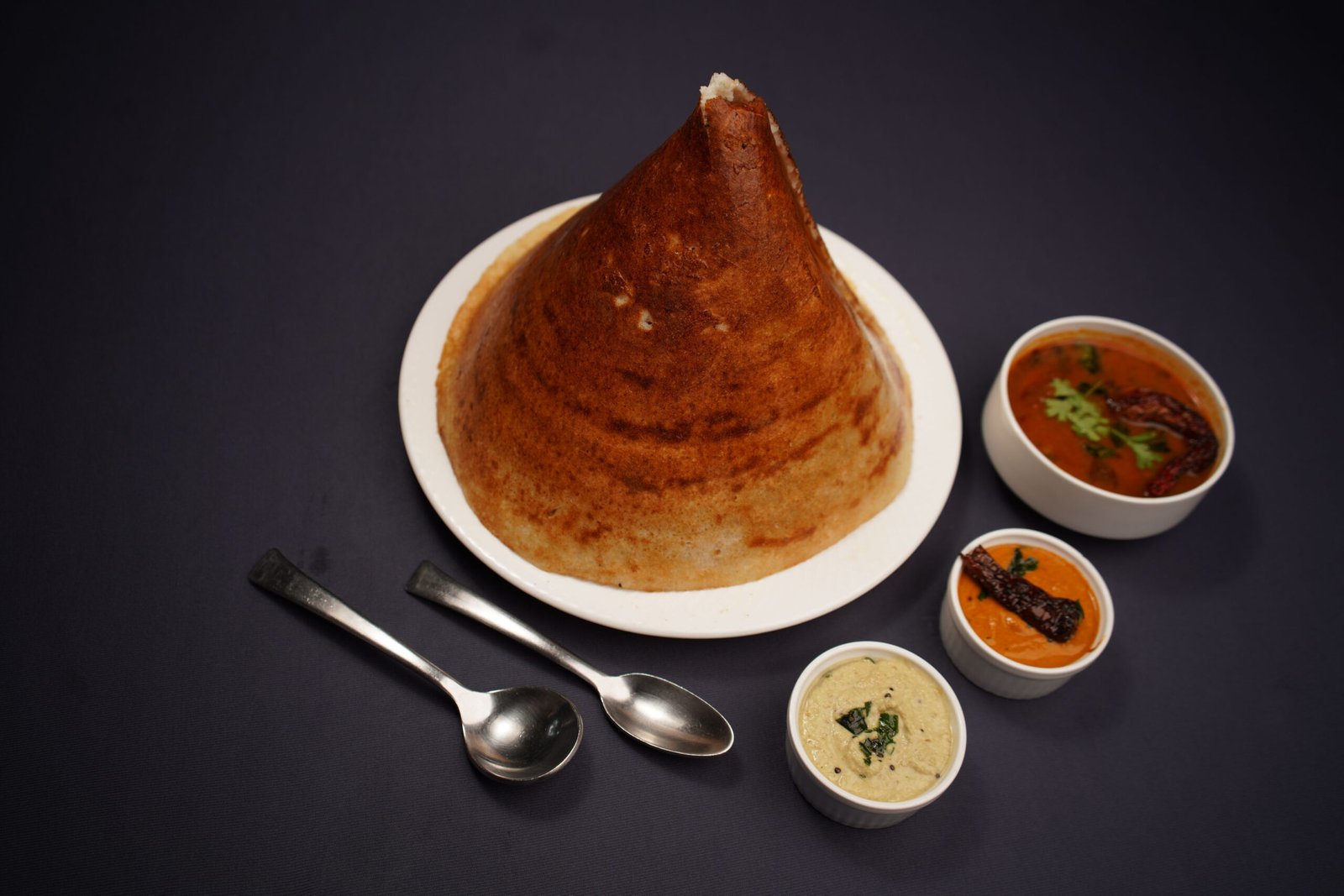
If you are searching for a south indian cuisine restaurant, the short answer is this: look for a small, busy place that makes its dosa batter fresh, serves sambar and chutneys made that day, and has South Indian families eating there. The best south indian cuisine restaurant near you is rarely the biggest or flashiest one. It is the place where the dosa arrives crisp and golden, the idli is soft and steaming, and the filter coffee comes frothy in a steel tumbler. This guide explains what South Indian food is, the dishes worth trying, how it differs from North Indian food, and how to find a good south indian cuisine restaurant for your taste, your diet and your budget.
What Is South Indian Food?
A south indian cuisine restaurant serves the food of southern India — Tamil Nadu, Karnataka, Kerala, Andhra Pradesh and Telangana. It is built on rice and lentils rather than wheat, and its signature flavours are coconut, curry leaves, mustard seeds, tamarind and dried red chillies. The food is lighter and tangier than most North Indian cooking, with sourness from tamarind and tomato, heat from chillies and black pepper, and fragrance from curry leaves fried in hot oil.
The base of almost everything is a fermented batter of rice and urad dal (black lentils). That one batter becomes dosa, idli and uttapam, which is why these dishes appear on every menu. Rice is the centre of the meal, served with sambar, rasam, vegetable dishes and curd. Coconut appears in many forms: grated into chutneys, ground into curries, and pressed into oil for cooking, especially in Kerala. When you walk into a south indian cuisine restaurant, the first thing you notice is the smell — mustard seeds popping, curry leaves crackling, and fresh coffee brewing.
South Indian food is also one of India’s oldest cuisines. Dosa has been eaten in Tamil Nadu for well over a thousand years, and idli is mentioned in Kannada literature from around the 10th century — these are dishes cooked the same way for generations.
Dosa: The Star of the Menu
Dosa is a thin, crisp pancake made from fermented rice and lentil batter, cooked on a hot griddle until golden. It is the dish most people order first, and the one that tells you the most about a kitchen. At a south indian cuisine restaurant, the dosa menu is usually the longest part of the menu, and learning the main types helps you order well.
Masala Dosa
Masala dosa is the most famous dosa of all: a crisp, golden crepe folded around spiced potato filling — potatoes cooked with mustard seeds, curry leaves, turmeric, onion and green chilli — served with sambar and coconut chutney. It is the dish most worth ordering on a first visit, and the most ordered dish in any south indian cuisine restaurant. A good one is crisp at the edges, soft in the middle, and the filling is warm and well seasoned, never bland.
Plain Dosa and Rava Dosa
A plain dosa is the same crisp crepe with no filling, served with sambar and chutney. It is the simplest test of a kitchen: with nothing to hide behind, the batter has to be right. A good one shatters when you break it and tastes faintly sour from fermentation. Rava dosa is different: it is made from semolina (rava) instead of fermented batter, so it needs no overnight fermentation. The thin batter is poured onto a very hot griddle, where it sets into a lacy, crisp net. It is lighter and crunchier than a regular dosa, served with the same sambar and chutneys.
Mysore Dosa, Paper Dosa and Set Dosa
Mysore dosa is a masala dosa with spicy red garlic chutney spread inside before the filling — hotter and more strongly flavoured, a good choice if you like chilli heat. Paper dosa is a very large, very thin dosa rolled into a cone, mostly crunch and fun to share. Set dosa is the opposite: small, thick, soft and spongy dosas from Karnataka, served in a set of three with a vegetable curry called sagu.
Idli, Vada and Uttapam
Idli is a soft, white, steamed rice cake, made from the same fermented batter as dosa but steamed instead of fried. It is light, fluffy, easy to digest, and one of the healthiest dishes on the menu. Every south indian cuisine restaurant serves idli with sambar and coconut chutney, and it is a favourite breakfast across South India — a good choice for children and anyone who wants something gentle.
Medu vada is a savoury doughnut made from urad dal batter, fried until crisp outside and soft inside, usually served with sambar and chutney and often eaten with idli. Sambar vada is vada soaked in hot sambar until soft — comfort food in a bowl. If you like crisp textures, order vada on the side.
Uttapam is a thick pancake made from the same batter, cooked with toppings pressed into the top — onion, tomato, green chilli and capsicum are the usual ones. It is thicker and softer than a dosa, a little like a savoury pancake, and filling enough to be a meal on its own. Cheese and mushroom are common modern versions, but the classic onion-tomato uttapam is still the best place to start.
Sambar, Rasam and the Flavours That Define the Cuisine
No south indian cuisine restaurant meal is complete without sambar: a lentil stew, usually made with toor dal, cooked with vegetables such as drumstick, pumpkin, carrot and okra, soured with tamarind and seasoned with sambar powder and a tempering of mustard seeds, cumin, curry leaves, dried red chillies and asafoetida. It is served with almost everything — poured over idli, beside dosa, and with rice. A good sambar is balanced: sour from tamarind, warm from spices, thick enough to coat the rice but not heavy.
Rasam is thinner and sharper than sambar: a tangy broth of tamarind, tomato, black pepper, cumin and garlic, often served as a soup or poured over rice. In a south indian cuisine restaurant, rasam usually comes after the main dishes, a little like a palate cleanser, and it is known for soothing a cold or sore throat — the black pepper and garlic give it a warming kick.
The flavours that define the cuisine are few but distinctive. Coconut brings richness, grated into chutney or ground into curry. Curry leaves, fried briefly in hot oil, give a warm, nutty aroma that is unmistakably South Indian. Mustard seeds pop in the tempering and add a sharp bite, and tamarind brings the sourness that balances the heat. Together, these four ingredients appear in almost every dish.
Banana Leaf Meals and the South Indian Thali
A banana leaf meal is the traditional way to serve a South Indian feast: food served directly on a fresh banana leaf — rice in the centre, sambar, rasam, vegetable dishes, chutney, curd and a sweet — eaten by hand. Some south indian cuisine restaurant menus offer one at weekends or on special occasions, and it is worth ordering if you see it. The meal is eaten in order: start with the dry dishes, move to sambar and rasam with rice, and finish with curd rice and a sweet.
Kerala’s version is called sadya, served during the Onam festival and at weddings. A sadya can have more than twenty dishes on one leaf, including avial (mixed vegetables in coconut), thoran (stir-fried vegetables with coconut), and payasam, a sweet pudding of rice or lentils with jaggery and coconut milk. A South Indian thali is the same idea on a steel plate — small dishes around a mound of rice, giving you a taste of everything in one meal.
Filter Coffee: The Perfect Finish
A good south indian cuisine restaurant finishes the meal with filter coffee. It is made in a two-part metal filter: ground coffee sits in the top chamber, hot water drips slowly through it, and a strong, dark decoction collects below. The decoction is mixed with hot, frothy milk and sugar, poured back and forth between a small steel tumbler and a wider bowl called a davara to build a thick foam, and served very hot.
The result is strong, sweet and milky, quite different from a flat white or a latte, and usually made with a blend of coffee and chicory for a dark, roasted flavour. Kumbakonam degree coffee, from the Tamil town of Kumbakonam, is the most famous version — “degree” refers to the milk, heated to a precise point for the best froth. If you have never tried it, order one after your meal: it is cheap, quick, and the most South Indian way to end a meal.
North Indian vs South Indian Food
North Indian vs South Indian food is one of the most common questions people ask, and the differences are easy to spot. The two cuisines come from different climates, staple crops and histories, so they taste quite different.
| Feature | South Indian | North Indian |
|---|---|---|
| Staple | Rice and lentils | Wheat: naan, roti, paratha |
| Key flavours | Coconut, tamarind, curry leaves, mustard seeds | Ghee, cream, garam masala, onion-tomato gravy |
| Cooking style | Steaming, fermenting, tempering | Tandoor oven, slow-cooked gravies |
| Signature dishes | Dosa, idli, sambar, uttapam | Butter chicken, dal makhani, biryani |
| Heat | Chillies and black pepper, often tangy | Chillies and garam masala, often rich |
| Bread | Almost no bread; dosa and appam instead | Naan, roti and paratha with every meal |
In a south indian cuisine restaurant, rice is the centre of the meal and the food is usually lighter and tangier. In a North Indian restaurant, bread and rich gravies take the lead, with cream and ghee far more common. Neither is better — they are simply different. South Indian food is also more often vegetarian, shaped by the temple food traditions of the south, while North Indian food has a stronger tradition of meat dishes from the tandoor. If you are choosing, think about what you want: light, tangy and rice-based, or rich, creamy and bread-based.
How to Find the Best South Indian Restaurant Near Me
The best south indian cuisine restaurant near you is usually the one that South Indian families eat at. Start with the signs, not the star ratings: a busy dining room at lunch, a short menu, and the smell of fresh dosa batter and filter coffee are worth more than a hundred reviews.
What to Look For in a Good South Indian Restaurant
A good south indian cuisine restaurant makes its batter fresh and ferments it properly — the dosa should taste faintly sour and shatter when you break it, and the idli should be soft and spongy, not dense. The sambar should be made that day, with real vegetables and a proper tempering. The chutneys should be fresh and white or pale green, not grey or stale. Look for a menu that lists the dosa varieties by name — masala, rava, Mysore, set — because it shows the kitchen takes dosa seriously. And look for South Indian customers: if Tamil, Kannada, Telugu or Malayalam families eat there, the food is right.
What to Ask Before You Order
Ask which dosa the staff recommend, and whether the batter was made fresh today. Ask how spicy the sambar is, and whether rasam is available — it often is not on the menu but the kitchen will serve it if you ask. If you are ordering for the first time, ask for a masala dosa, a plate of idli-vada and a filter coffee, and judge the kitchen on those three. If you have allergies, ask about the batter and chutneys, because peanuts, cashew and sesame can all appear, and some commercial asafoetida contains wheat. A good shop will answer happily, and that is another sign you have found a good south indian cuisine restaurant.
South Indian Vegetarian Food
A south indian cuisine restaurant is one of the easiest places to eat well as a vegetarian. Most dishes at a south indian cuisine restaurant are vegetarian by default, and many are vegan too. Dosa, idli, uttapam, sambar and rasam are all traditionally vegetarian, shaped by temple food traditions that avoid meat and often avoid onion and garlic as well.
That does not mean the food is limited. The vegetarian menu at a good restaurant is wide: vegetable uttapam with onion and tomato, avial with mixed vegetables and coconut, poriyal of stir-fried beans or cabbage, kootu of lentils and vegetables, and curd rice with mango pickle. For vegans, ask for dishes without ghee or curd — most kitchens will use oil instead, and coconut chutney is naturally vegan. South Indian vegetarian food is not a compromise version of the menu. It is the menu.
South Indian food is not all vegetarian. Chettinad chicken from Tamil Nadu is fiery with black pepper, Kerala fish curry is cooked in coconut milk with kokum, and Andhra chilli chicken is one of the spiciest dishes in India. If you eat meat or fish, ask about the regional specials — they are often the best dishes on the menu, and they show the other side of the cuisine.
Frequently Asked Questions
What is the best dish to order at a south indian cuisine restaurant?
The best south indian cuisine restaurant order for a first visit is a masala dosa, a plate of idli with sambar, and a filter coffee. The dosa shows the quality of the batter and filling, the idli shows whether the kitchen steams properly, and the coffee shows whether they care about the finish.
What is the difference between dosa and uttapam?
Dosa is a thin, crisp crepe made from fermented rice and lentil batter, cooked until golden, usually served with a filling or on its own. Uttapam is a thick, soft pancake from the same batter, cooked with toppings such as onion, tomato and capsicum pressed into the top. Dosa is crisp and light; uttapam is soft and filling.
Is South Indian food gluten-free?
Much of it is. Dosa, idli, uttapam, sambar and rasam are made from rice and lentils, so they are naturally gluten-free. At a south indian cuisine restaurant, check anything with asafoetida — some commercial asafoetida contains wheat — and anything fried in shared oil, and always tell staff if you have coeliac disease.
Is South Indian food very spicy?
Not always. South Indian food uses chillies and black pepper for flavour, but many dishes are mild. Sambar and rasam can be hot, but idli, plain dosa and curd rice are gentle. If you are unsure, ask for the sambar on the side and order a plain dosa first — you can always add heat with chutney.
What is filter coffee?
Filter coffee is South Indian coffee made by slowly dripping hot water through ground coffee in a metal filter to make a strong decoction, then mixing it with hot, frothy milk and sugar. It is served in a steel tumbler and davara bowl — strong, sweet and milky, and the traditional way to finish a South Indian meal.
What is served on a banana leaf?
A banana leaf meal is a South Indian feast served directly on a fresh banana leaf: rice in the centre, sambar, rasam, vegetable dishes, chutney, curd and a sweet such as payasam. It is eaten by hand, in order, finishing with curd rice and the sweet.
Does a south indian cuisine restaurant serve meat and fish?
Many do, even though the cuisine is famous for vegetarian food. Chettinad chicken from Tamil Nadu, Kerala fish curry in coconut milk, and Andhra chilli chicken are all well known regional dishes. Ask about the regional specials if you eat meat or fish — they are often the best dishes on the menu.
How do I find the best south indian restaurant near me?
Look for a busy dining room with South Indian families, a short menu with the dosa varieties listed by name, fresh batter, sambar made that day, and filter coffee on the menu. Read reviews that mention dosa, idli and sambar by name, and try one new place a month — the best hidden gem is often the small place you have walked past many times.
Whether you go for a crisp masala dosa, soft idli with sambar, or a banana leaf feast finished with filter coffee, the next time you search for a south indian cuisine restaurant you will know exactly what to look for. Start with the classics, trust the places the locals queue for, and try one new dish each visit. For more recipes, food guides and restaurant ideas, visit Smart Visions.
