
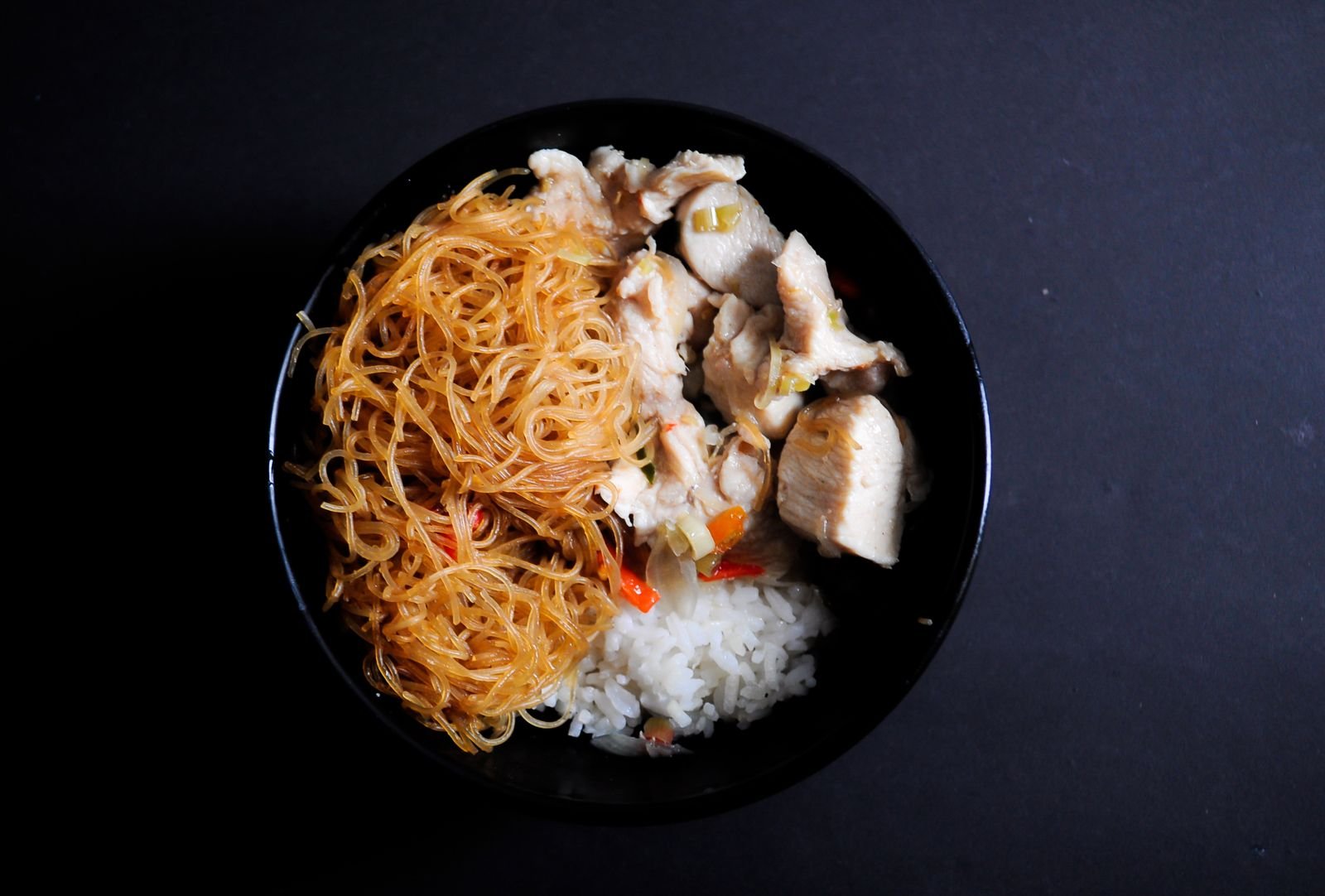
If you are searching for gluten free chinese food near me, here is the honest answer: yes, you can find it, but Chinese food is one of the hardest cuisines for a gluten-free diet. Regular soy sauce is brewed with wheat, and it goes into almost every sauce, marinade and stir-fry a Chinese kitchen makes. The best gluten free chinese food near me options are plain steamed rice, rice noodle dishes, and stir-fries made with gluten-free tamari instead of soy sauce — but only when the kitchen confirms the ingredients and takes cross-contamination seriously. This guide explains what is safe, what to avoid, and exactly what to ask before you order.
What Does Gluten-Free Chinese Food Mean?
Gluten is a protein in wheat, barley and rye. For most people, avoiding it is a choice. For people with coeliac disease, it is a medical need: coeliac disease is an autoimmune condition, not an allergy, and even a tiny amount — more than 20 parts per million — triggers an immune reaction that damages the gut. That is why “gluten-free” has a legal meaning in the UK and the EU: a food can only use the term if it contains no more than 20 parts per million of gluten.
That matters when you look for gluten free chinese food near me. A dish can be made from naturally gluten-free ingredients and still not be safe, because a splash of regular soy sauce or a shared wok can push it over the limit. So this guide uses “gluten-free” in two senses: dishes that are naturally gluten-free, and dishes that can be made gluten-free if the kitchen swaps the sauce and uses clean equipment. In every case, confirm with the restaurant, because recipes vary.
Why Chinese Food Is So Tricky for Gluten-Free Diets
Chinese cooking is built on sauces, and most of those sauces contain wheat. Regular soy sauce is the biggest problem: it is brewed from roughly equal parts soybeans and wheat, so it is a wheat product, not a trace ingredient. It goes into marinades, braises, stir-fry sauces, dipping sauces and noodle soups, often in amounts you cannot see or taste. When you search for gluten free chinese food near me, soy sauce is the first thing to check, because it is in almost everything.
The problem does not stop there. Oyster sauce is usually thickened with wheat flour, hoisin often contains wheat flour too, and black bean sauce can contain wheat because its fermented bean paste is sometimes made with wheat flour. Some chilli oils, plum sauces and Shaoxing cooking wine can contain wheat or barley malt as well. Wheat itself appears everywhere: wheat noodles, dumpling wrappers, wonton skins, spring roll pastry, steamed buns, battered sweet-and-sour chicken, and the flour used to coat meat before frying. That is why a Chinese takeaway is one of the hardest places to eat gluten-free, and why a search for gluten free chinese food near me brings up so many mixed answers — it is not impossible, but it takes more care than most cuisines.
The Sauces: What Is Safe and What Is Not
Sauces decide whether a Chinese dish is gluten-free. Here is how these sauces are normally made — brands and recipes vary, so always confirm with the restaurant.
| Sauce | Usually safe? | What to know |
|---|---|---|
| Regular soy sauce | No | Brewed with wheat; the main hidden gluten source |
| Gluten-free tamari | Yes, if labelled gluten-free | Wheat-free soy sauce; not all tamari is gluten-free, check the label |
| Rice vinegar | Usually yes | Plain rice vinegar is normally gluten-free |
| Fish sauce | Usually yes | Made from fish and salt; check the label for wheat |
| Oyster sauce | Usually no | Most brands use wheat flour as a thickener; gluten-free versions exist |
| Hoisin sauce | Usually no | Wheat flour is a common thickener; gluten-free versions exist |
| Plum sauce | Ask | Often safe, but sometimes thickened with wheat flour |
| Chilli bean paste (doubanjiang) | Usually no | Traditional versions ferment broad beans with wheat flour |
| Sweet and sour sauce | Ask | Often made with soy sauce or thickened with wheat flour |
| Coconut aminos | Yes | A soy-free, wheat-free alternative, though sweeter in flavour |
The most useful fact here is about tamari. Tamari is a type of soy sauce made mostly from soybeans, with little or no wheat. But not every tamari is gluten-free — some brands still add a small amount of wheat. Only tamari explicitly labelled “Gluten Free” is safe for coeliacs. Learning this table is the fastest way to order gluten free chinese food near me safely, and the best question you can ask a restaurant is: “Do you cook with gluten-free tamari instead of regular soy sauce?”
Dishes That Can Be Gluten-Free
These dishes can be gluten-free, but none of them is automatically safe. Build your gluten free chinese food near me order around them only after the kitchen confirms each one.
Steamed rice
Plain steamed rice is naturally gluten-free and the safest base for any Chinese meal. The risk is what gets added: soy sauce, stock cubes that contain wheat, or fried rice cooked in a shared wok with soy sauce. Ask for it plain, made fresh, with no sauce added.
Rice noodle dishes
Rice noodles — flat white noodles and thin vermicelli — are made from rice, not wheat, so they are naturally gluten-free. The dish is only safe if the sauce is made with tamari and the noodles are not cooked in the same water as wheat noodles, which some shops do — ask about it.
Stir-fries made with tamari
A simple stir-fry of chicken, beef, prawns or tofu with vegetables can be gluten-free when the sauce is built from tamari and cornstarch instead of soy sauce and wheat flour. Chicken and broccoli, beef and peppers, and tofu and vegetables are good choices — ask for no breading and no oyster or hoisin sauce unless the restaurant confirms a gluten-free version.
Steamed fish and seafood
Steamed whole fish, steamed prawns and salt-and-pepper prawns without batter are naturally gluten-free, as long as the seasoning is simple. Cantonese-style steamed fish with ginger and spring onions is one of the safest dishes in Chinese cooking — ask them to leave off any soy-based sauce, or to use tamari.
Hot pot, mapo tofu and soups
Hot pot can work well, because you cook the ingredients yourself. Check the broth — many contain soy sauce or bean paste — and note that dipping sauces at the sauce bar are often shared with the same spoons. Choose a clear or tomato-based broth, and bring your own tamari for dipping if the restaurant allows it. Mapo tofu, a Sichuan dish of soft tofu in a spicy sauce, can be gluten-free too, but only with care, because its chilli bean paste is often made with wheat flour. Egg drop soup can be gluten-free when thickened with cornstarch and seasoned with tamari; skip wonton soup, because wontons use wheat wrappers.
Dishes to Avoid
These dishes are almost never gluten-free at a standard Chinese restaurant — skip them unless the restaurant has a dedicated gluten-free menu and confirms otherwise.
- Dumplings, wontons and bao buns. The wrappers and buns are made from wheat flour. Steamed does not mean safe — the wrapper is still wheat.
- Wheat noodles. Lo mein, chow mein, dan dan noodles and ramen-style noodles are all wheat-based.
- Spring rolls and egg rolls. The pastry is wheat, and they are fried in shared oil.
- Battered dishes. Sweet and sour chicken, sweet and sour pork, battered prawns and crispy chilli beef are coated in wheat batter, and the sauce often contains soy sauce too.
- Dishes with hoisin or oyster sauce. Peking duck with hoisin and beef in oyster sauce use sauces that almost always contain wheat.
- Soy sauce-based marinades. Char siu pork, soy-glazed chicken and marinated meats are usually soaked in regular soy sauce.
If a dish is covered in a thick brown sauce, assume it contains wheat until the restaurant tells you otherwise. Knowing what to skip is half the skill of ordering gluten free chinese food near me, and that simple rule will keep you safe more often than not.
How to Find Gluten Free Chinese Food Near Me
Finding gluten free chinese food near me takes a little more work than finding a normal Chinese takeaway, but the search itself is simple once you know what to look for.
Search for a gluten-free menu
Start by searching for Chinese restaurants that mention gluten-free on their own website or menu, and look for phrases like “gluten-free menu”, “coeliac friendly” or “gluten-free options available”. The best gluten free chinese food near me is usually found at a restaurant that already thinks about allergies, and a dedicated gluten-free menu is the clearest sign of that.
Check Coeliac UK accreditation
In the UK, Coeliac UK accredits restaurants that have had extra training in gluten-free cooking, and their website lists accredited venues. Accreditation is not a guarantee — cross-contamination can still happen — but it shows the kitchen has been trained and assessed. UK restaurants must also have an allergen list by law, so ask to see it.
Read reviews from other gluten-free diners
When you search for gluten free chinese food near me, read reviews that mention gluten-free or coeliac by name, not just the restaurant in general. A review from a coeliac diner who ate safely is worth far more than a five-star review from someone who never had to ask. Food allergy apps and coeliac groups are good sources too, because people share which kitchens they trust.
Call ahead
This is the single most useful step. Call before you go and ask: “Do you have gluten-free options? Do you use gluten-free tamari? Can you cook my dish in a clean wok?” A kitchen that answers clearly is a good sign; one that sounds unsure is not. Calling ahead also lets the kitchen prepare, which matters for cross-contamination.
What to Ask Before You Order
When you arrive, tell the staff clearly that you need gluten-free food because of coeliac disease or a wheat allergy — not just a preference. Kitchens take a medical need more seriously. Then ask:
- “Do you use gluten-free tamari instead of regular soy sauce?”
- “Can you cook my dish in a clean wok with clean utensils?”
- “Which sauces in this dish contain wheat — soy sauce, oyster sauce, hoisin?”
- “Are the rice noodles cooked separately from the wheat noodles?”
- “Is the fryer shared with battered or breaded food?”
- “Can I see your allergen list for this dish?”
If the staff cannot answer, or if they say the kitchen uses the same wok for everything, choose plain steamed rice with a simple steamed dish, or eat somewhere else. Asking these questions is what turns a hopeful guess into a safe gluten free chinese food near me meal — and no meal is worth a reaction.
Cross-Contamination: The Risk Most People Miss
Cross-contamination is the part of gluten free chinese food near me that most guides skip, but it matters most for coeliacs. A dish can contain no wheat at all and still not be safe, because gluten travels on shared equipment. In a busy Chinese kitchen, woks are wiped, not scrubbed, between dishes, so a wok that just cooked a soy-sauce stir-fry still carries gluten. Fryers are shared too, noodle shops may boil wheat and rice noodles in the same water, hot pot sauce bars use shared spoons, and even chopping boards, tongs and ladles can carry it.
That is why “Can you use a clean wok?” matters so much. A separate wok, clean utensils, fresh oil and a clean surface are what make a dish genuinely gluten-free rather than just wheat-free in its ingredients. If you have coeliac disease, assume shared equipment is the default and ask for it to be changed. If the kitchen cannot do that, the safest choice is plain steamed rice and a plain steamed dish, with no sauce.
Eating In, Takeaway and Cooking at Home
Eating in is usually safer than takeaway, because you can talk to the staff face to face, see the allergen list, and ask questions while the kitchen cooks. Delivery apps rarely pass allergy notes to the kitchen reliably. If you order gluten free chinese food near me as takeaway, call the restaurant directly instead of using an app, explain your needs clearly, and ask them to confirm the order back to you.
If finding gluten free chinese food near me proves difficult, cooking at home is the safest option of all. Buy tamari explicitly labelled “Gluten Free”, rice noodles, and rice vinegar. With those three, plus fresh vegetables, meat or tofu, and cornstarch, you can make a safe stir-fry in fifteen minutes: cook everything in a clean wok, add tamari and a little rice vinegar, thicken with cornstarch mixed with cold water, and serve over plain steamed rice. Keep a separate bottle of tamari and a clean pan for gluten-free cooking, labelled so nobody uses them for wheat-based dishes by mistake.
Frequently Asked Questions
Is Chinese food gluten-free?
Most Chinese food is not gluten-free, because regular soy sauce is brewed with wheat and goes into almost every sauce, marinade and stir-fry. Some dishes can be gluten-free — plain steamed rice, rice noodle dishes, and stir-fries made with gluten-free tamari — but always confirm with the restaurant, because recipes vary.
What is the best gluten free chinese food near me to order?
The safest orders are plain steamed rice, a stir-fry made with gluten-free tamari, steamed fish with ginger and spring onions, or rice noodles in a tamari-based sauce. Ask the kitchen to use a clean wok and clean utensils, and to leave off oyster and hoisin sauce unless they confirm a gluten-free version.
Is soy sauce gluten-free?
No. Regular soy sauce is brewed from soybeans and wheat, so it contains gluten. The gluten-free alternative is tamari that is explicitly labelled “Gluten Free”. Not all tamari is gluten-free — some brands still add wheat — so check the label every time.
Is tamari always gluten-free?
No. Tamari is usually made with little or no wheat, but some brands add a small amount of wheat during brewing. Only tamari that says “Gluten Free” on the label, or is certified gluten-free, is safe for people with coeliac disease.
Are rice noodles gluten-free?
Yes, rice noodles are made from rice, not wheat, so they are naturally gluten-free. The risk is cross-contamination: some kitchens boil them in the same water as wheat noodles, or toss them in a sauce made with regular soy sauce. Ask the restaurant to confirm both.
Are dumplings gluten-free?
No. Dumplings, wontons, bao buns and spring rolls all use wheat flour wrappers or pastry. Steamed does not mean safe — the wrapper is still wheat. There are no gluten-free dumplings on a standard Chinese menu unless the restaurant makes them with rice flour wrappers and says so.
Can coeliacs eat at a Chinese restaurant?
Yes, but with care. Choose a restaurant with a gluten-free menu or Coeliac UK accreditation, call ahead, tell staff you have coeliac disease, and ask for a clean wok, gluten-free tamari and no shared fryer. If the kitchen cannot do that, choose plain steamed rice and a simple steamed dish, or eat elsewhere.
What should I ask for at a Chinese restaurant if I am gluten-free?
Ask for gluten-free tamari instead of soy sauce, a clean wok and clean utensils, and no oyster or hoisin sauce unless it is a confirmed gluten-free version. Ask whether the rice noodles are cooked separately from wheat noodles, and whether the fryer is shared. Always ask to see the allergen list.
Conclusion
Searching for gluten free chinese food near me is a search that rewards care. Chinese food is one of the hardest cuisines for a gluten-free diet, because wheat hides in soy sauce, oyster sauce, hoisin, noodles and wrappers. But it is not impossible. Plain steamed rice, rice noodle dishes, tamari-based stir-fries and steamed fish are all within reach — as long as the kitchen confirms the ingredients and uses clean equipment. Call ahead, ask the right questions, and never feel awkward about it. That is the whole skill behind finding gluten free chinese food near me: know the sauces, ask the questions, and trust only the kitchens that answer clearly. For more food guides, restaurant ideas and recipes, visit Smart Visions.
