
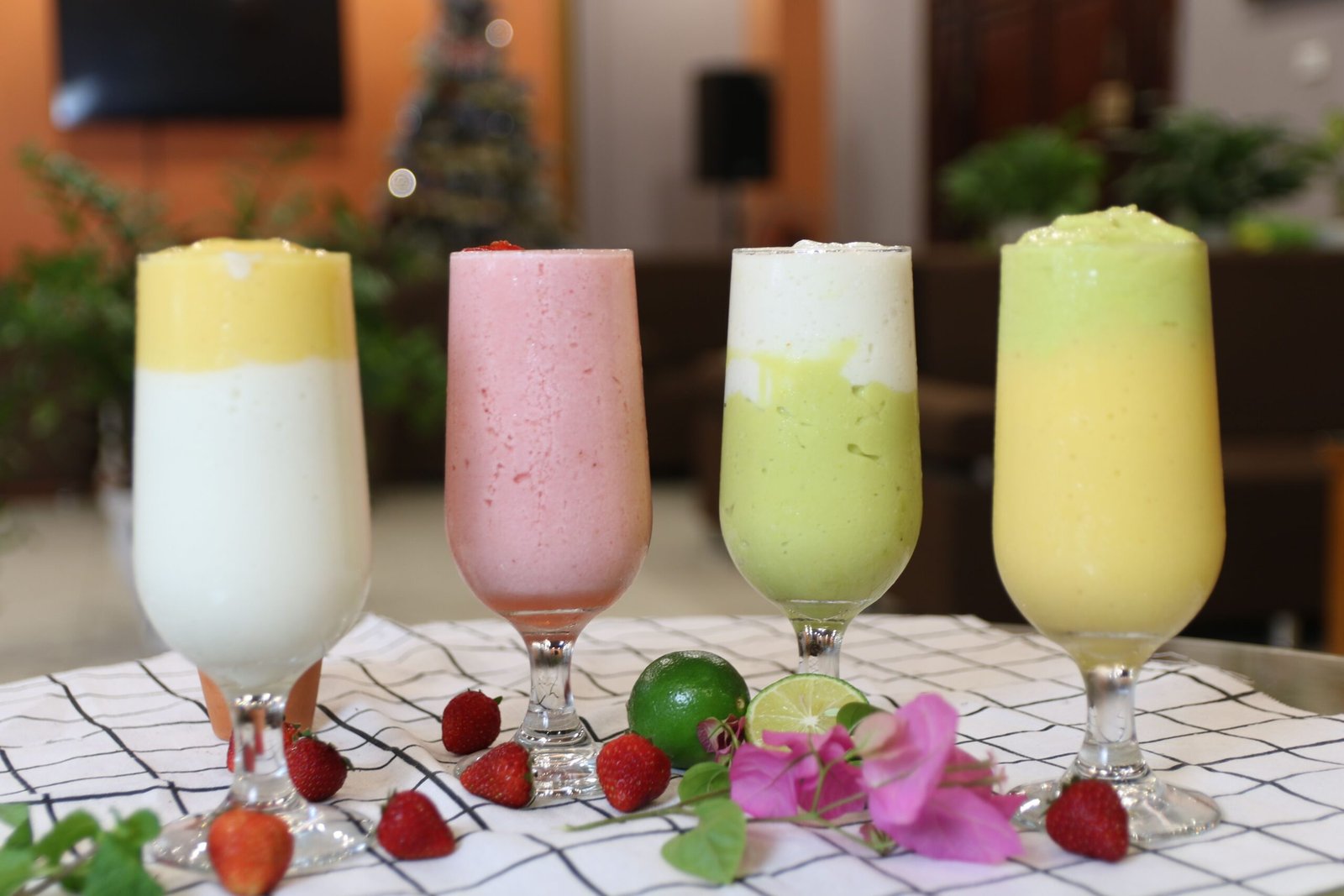
If you are looking for healthy smoothie recipes, the short answer is this: a good smoothie is built from real fruit, vegetables, a protein or fibre source, and a liquid with no added sugar — and the best ones take five minutes to make. The best healthy smoothie recipes are simple: frozen berries with banana and yoghurt, mango with spinach and oats, or a green smoothie with kale, apple and ginger. This guide explains what makes a smoothie healthy, the formula to build your own, and the recipes worth trying — for breakfast, for weight loss, for gut health, for kids, and for a tight budget.
What Makes a Smoothie Healthy?
A smoothie is only as healthy as what goes into it. The best healthy smoothie recipes start with whole ingredients: fruit, vegetables, oats, nuts or seeds, and yoghurt or milk. They get their sweetness from fruit, not from syrup, honey or juice concentrate, and they include something to keep you full — protein or fibre — instead of being pure fruit sugar.
That matters because fruit alone blends into a drink that is mostly sugar, even if the sugar is natural. A banana and two handfuls of berries sound light, but with a large glass of orange juice as the liquid the total sugar can be higher than a fizzy drink. Good healthy smoothie recipes keep the fruit to one or two portions, add vegetables or oats for bulk, and use water, milk or unsweetened yoghurt as the base.
Check the label when you buy a ready-made smoothie. Many shop-bought smoothies contain added sugar or fruit juice concentrate, and a small bottle can hold as much sugar as a dessert. The easiest way to be sure is to make your own: a blender, a few minutes, and ingredients you chose yourself. That is the whole point of healthy smoothie recipes — they are quick, simple, and you know exactly what is inside them.
The Basic Healthy Smoothie Formula
You do not need a recipe book to build a good smoothie. Once you know the formula, you can make your own healthy smoothie recipes from whatever is in the fridge. The formula has four parts.
The liquid
Start with about 200 ml of liquid. Water is the simplest choice and adds no calories. Milk adds protein and calcium, and unsweetened plant milks such as oat or soya milk work the same way. Plain yoghurt thinned with a little water makes a thick, creamy base. Avoid fruit juice as the main liquid — it adds a lot of sugar without fibre.
The fruit
Add one or two portions of fruit, about 150 g in total. Banana gives thickness and natural sweetness. Berries — strawberries, blueberries, raspberries — add flavour and colour with relatively little sugar. Mango, peach, pineapple and kiwi all work well. Frozen fruit is just as good as fresh and often cheaper, and it makes the smoothie cold and thick without ice.
The vegetables
This is the part most people skip, and it is what turns a fruit drink into a genuinely healthy smoothie. A handful of spinach or kale blends in almost invisibly — you will taste the fruit, not the leaves. Half a cucumber, a small carrot, or a stalk of celery adds bulk and nutrients without changing the flavour much. Frozen cauliflower is a trick used in many good healthy smoothie recipes: a few florets make the smoothie thick and creamy with almost no taste at all.
The protein and fibre
Add something to keep you full. A spoonful of oats adds fibre and makes the smoothie more filling. A tablespoon of peanut butter, almond butter or seeds adds healthy fats and protein. A few spoonfuls of Greek yoghurt or a scoop of protein powder does the same. Without this part, a smoothie is a snack that leaves you hungry again in an hour.
Best Healthy Smoothie Recipes to Start With
If you want the best healthy smoothie recipes to try first, start with these four. They are the most popular for a reason: they taste good, they use everyday ingredients, and they follow the formula above.
Banana, Berry and Oat Smoothie
Blend one banana, a handful of frozen mixed berries, two tablespoons of oats, a few spoonfuls of Greek yoghurt and 200 ml of milk. It is thick, filling and sweet enough without any added sugar, and it is one of the easiest healthy smoothie recipes to make — five minutes, one blender, no cooking. This is the one to try first if you are new to smoothies.
Mango and Spinach Smoothie
Blend half a mango, a large handful of spinach, half a banana, a spoonful of oats and 200 ml of water or coconut water. The mango hides the spinach completely, so this is a good way to eat greens if you do not like salads. It is one of the best healthy smoothie recipes for a hot day, cold and refreshing, and it works just as well with frozen mango.
Green Smoothie
Blend a handful of kale or spinach, half an apple, half a cucumber, a small piece of ginger, half a lemon (juiced) and 200 ml of water. The ginger and lemon keep it fresh and stop it tasting leafy. Green smoothies are popular in healthy smoothie recipes uk searches for a reason — they are the simplest way to eat more vegetables at breakfast without cooking anything.
Peanut Butter and Banana Smoothie
Blend one banana, a tablespoon of peanut butter, a spoonful of oats, 200 ml of milk and a few ice cubes. It tastes like a milkshake but it is built from real food, and the peanut butter and oats keep you full for hours. Use peanut butter with no added sugar for the healthiest version, and keep the portion to one tablespoon — it is filling, and a little goes a long way.
Healthy Smoothie Recipes for Breakfast
A breakfast smoothie should do two jobs: wake you up and keep you full until lunch. The best healthy smoothie recipes for breakfast include oats or yoghurt for staying power, and they can be made the night before and kept in the fridge.
A good breakfast formula is banana, oats, milk, a spoonful of peanut butter and a handful of berries. It takes five minutes, it is easy to drink on the way to work, and it is far more filling than a piece of toast. Another good option is overnight oats blended in the morning: oats soaked overnight in milk with chia seeds, then blended with a banana and berries.
If you make smoothies for the whole family, keep the base the same and let everyone choose their own fruit. One batch of banana, oats and milk can become a berry smoothie for one person and a mango smoothie for another, just by changing the fruit. That is why healthy smoothie recipes for breakfast work so well — the same formula, different flavours, no extra work.
Healthy Smoothie Recipes for Weight Loss
Healthy smoothie recipes for weight loss work when they replace a higher-calorie snack or meal, not when they are added on top of everything else. A smoothie can help with weight loss, but only as part of an overall balanced diet — no single recipe causes weight loss on its own, and anyone promising fast results from a smoothie is not being honest.
The rules are simple. Keep the portion to one glass, about 300 ml. Use vegetables for bulk — spinach, cucumber, celery — so the smoothie feels big without many calories. Keep the fruit to one portion and skip the sweet extras: no honey, no maple syrup, no sweetened yoghurt. Add protein or fibre so you stay full: Greek yoghurt, oats, chia seeds or a scoop of protein powder.
Easy healthy smoothie recipes for weight loss follow the same formula: spinach, half a banana, half a cucumber, a spoonful of oats, Greek yoghurt and water. It is filling, it is low in sugar, and it takes five minutes. Weight loss healthy smoothie recipes also work well as a light lunch when you are short on time — but a smoothie should not replace every meal. If you want to lose weight, a balanced diet with regular meals matters far more than any one recipe, and it is worth speaking to a doctor or dietitian for advice that fits you.
The same ideas apply to healthy smoothie recipes for weight loss uk readers: frozen berries and spinach are cheap in UK supermarkets all year round, and oats cost very little, so a weight-loss smoothie does not need expensive ingredients. Simple healthy smoothie recipes are often the best ones for weight loss, because they are the ones you will actually make every day.
Healthy Smoothie Recipes for Gut Health
Gut healthy smoothie recipes focus on fibre and fermented foods. Fibre feeds the good bacteria in the gut, and fermented foods such as live yoghurt and kefir add live cultures. Healthy smoothie recipes for gut health combine the two.
A simple gut-friendly smoothie is a handful of spinach, half a banana, a few spoonfuls of live yoghurt or kefir, a tablespoon of oats and 200 ml of water. The oats and fruit provide fibre, and the live yoghurt provides cultures. Another good option is a berry and kefir smoothie: frozen berries, kefir, a spoonful of chia seeds and a little water. Chia seeds soak up liquid and add fibre, and they make the smoothie thick without any extra sugar.
Keep it simple and regular. One fibre-rich smoothie a day, with plenty of water and a varied diet, is a sensible way to support gut health. These are general food ideas, not medical advice — if you have a gut condition or ongoing digestive problems, speak to a doctor or dietitian rather than relying on any recipe.
Healthy Smoothie Recipes for Diabetics
Healthy smoothie recipes for diabetics need more care than most, because fruit sugar affects blood sugar. The safest approach is to keep the fruit portion small, choose lower-sugar fruit, and always include protein or fibre to slow the sugar down.
Good choices are berries, which are lower in sugar than banana or mango, and green vegetables such as spinach, cucumber and celery, which add bulk with very little sugar. A suitable smoothie might be a handful of spinach, a small handful of berries, Greek yoghurt, a tablespoon of chia seeds and water. Avoid fruit juice as the liquid, skip honey and syrup completely, and be careful with large amounts of banana, mango or dried fruit, which are high in natural sugar.
This is general information only, not medical advice. If you have diabetes, check with your doctor or dietitian before changing your diet, and test how any new food affects your blood sugar. Portion size matters as much as the ingredients, so keep the glass small and treat a smoothie as part of a meal rather than an extra drink.
Healthy Smoothie Recipes for Weight Gain
Not everyone wants to lose weight. Healthy smoothie recipes for weight gain work the other way: they pack more energy into one glass, which is useful if you struggle to eat enough or want to build muscle.
The trick is to add energy-dense ingredients that are still real food: a full banana, two tablespoons of peanut butter, oats, whole milk, Greek yoghurt and a spoonful of seeds. A weight-gain smoothie might be a banana, peanut butter, oats, whole milk and a spoonful of honey — richer and higher in calories than a weight-loss smoothie, but still built from ordinary ingredients.
Drink it with a meal or as a snack between meals, not instead of a meal. And if you are gaining weight for health reasons, or you have lost weight without trying, speak to a doctor or dietitian first — unexplained weight loss should always be checked.
Healthy Smoothie Recipes for Kids
Healthy smoothie recipes for kids should be simple, sweet and fun. Fruit and yoghurt smoothies work best: banana and strawberries with milk, or mango with yoghurt, are flavours most children like. Let them choose the fruit and help with the blender — children are far more likely to drink something they helped to make.
Keep it brief and safe: use fruit and yoghurt as the base, skip added sugar, and keep portions small — a small glass is enough for a child. Smoothies are not a replacement for meals, and they should not replace water as the main drink. If a child has allergies, check every ingredient, and nuts and seeds should only be used if you are sure they are safe for that child. Parents and guardians should decide what is right for their own children.
Cheap Healthy Smoothie Recipes
Healthy smoothies do not need to be expensive. Cheap healthy smoothie recipes use the cheapest good ingredients: frozen fruit, bananas, oats and milk.
Frozen berries cost far less than fresh out of season, and they make the smoothie cold and thick. Bananas are one of the cheapest fruits in the supermarket — buy them ripe and freeze them in slices for smoothies. Oats cost very little and make any smoothie more filling. A basic cheap smoothie is a frozen banana, a handful of frozen berries, two tablespoons of oats, milk and water — under a pound a glass in most UK supermarkets.
Common Mistakes to Avoid
The most common mistake is making the smoothie too sweet: two bananas, a large glass of orange juice, honey and sweetened yoghurt in one glass can hold more sugar than a dessert. Second is making it too big — a litre of smoothie is a meal and a half, not a snack. Third is skipping the protein or fibre, which leaves you hungry again in an hour. Fourth is buying smoothies with added sugar and assuming they are healthy because they say “fruit” on the label. And fifth is using a smoothie to replace every meal — a smoothie is a useful part of a balanced diet, not a substitute for real food. Keep the portions sensible, the ingredients real, and the sugar low, and a smoothie is one of the easiest healthy habits there is.
What are the healthiest smoothie recipes?
The healthiest smoothie recipes combine fruit, vegetables, protein and fibre: for example, spinach, berries, banana, oats and Greek yoghurt with water or milk. The healthiest ones use whole fruit rather than juice, include vegetables for bulk, and contain no added sugar.
Are smoothies good for weight loss?
Healthy smoothie recipes to lose weight can help if they replace a higher-calorie snack or meal and are made with vegetables, one portion of fruit, and protein or fibre to keep you full. No smoothie causes weight loss on its own — it only helps as part of an overall balanced diet, and sustainable weight loss needs regular meals and activity, not a single recipe.
What is the best smoothie for breakfast?
A good breakfast smoothie is banana, oats, milk, peanut butter and berries. It takes five minutes, keeps you full until lunch, and can be made the night before. Add spinach or kale for extra vegetables without changing the taste.
Can I make smoothies with frozen fruit?
Yes, frozen fruit works very well in smoothies. It is often cheaper than fresh, it keeps for months, and it makes the smoothie cold and thick without ice. Frozen berries, mango and banana are all good choices, and frozen spinach works too.
Are smoothies good for gut health?
Smoothies with fibre and live cultures can support gut health: oats, fruit, vegetables and chia seeds provide fibre, and live yoghurt or kefir adds live cultures. This is general food information, not medical advice — if you have a gut condition, speak to a doctor or dietitian.
Can diabetics drink smoothies?
Diabetics can drink smoothies, but they need care: keep the fruit portion small, choose lower-sugar fruit such as berries, include protein or fibre, avoid fruit juice and added sugar, and watch the portion size. Always check with your doctor or dietitian first.
Are smoothies good for kids?
Yes, fruit and yoghurt smoothies are good for children in small portions — banana and strawberry with milk is a popular choice. Keep them low in sugar, keep portions small, and check for allergies. Smoothies are a snack, not a replacement for meals or water.
What is the cheapest way to make healthy smoothies?
Use frozen fruit, bananas, oats and milk — they are the cheapest good ingredients. Buy frozen berries in bulk, freeze ripe bananas in slices, and freeze spinach before it goes off. A basic banana, berry and oat smoothie costs very little per glass.
Healthy smoothie recipes are one of the easiest healthy habits to start: five minutes, one blender, and ingredients you already know. Start with a banana, berries and oats, add spinach when you are ready, and build your own combinations from there — the best smoothie is the one you will actually make every day. For more recipes, food guides and kitchen ideas, visit Smart Visions.
