
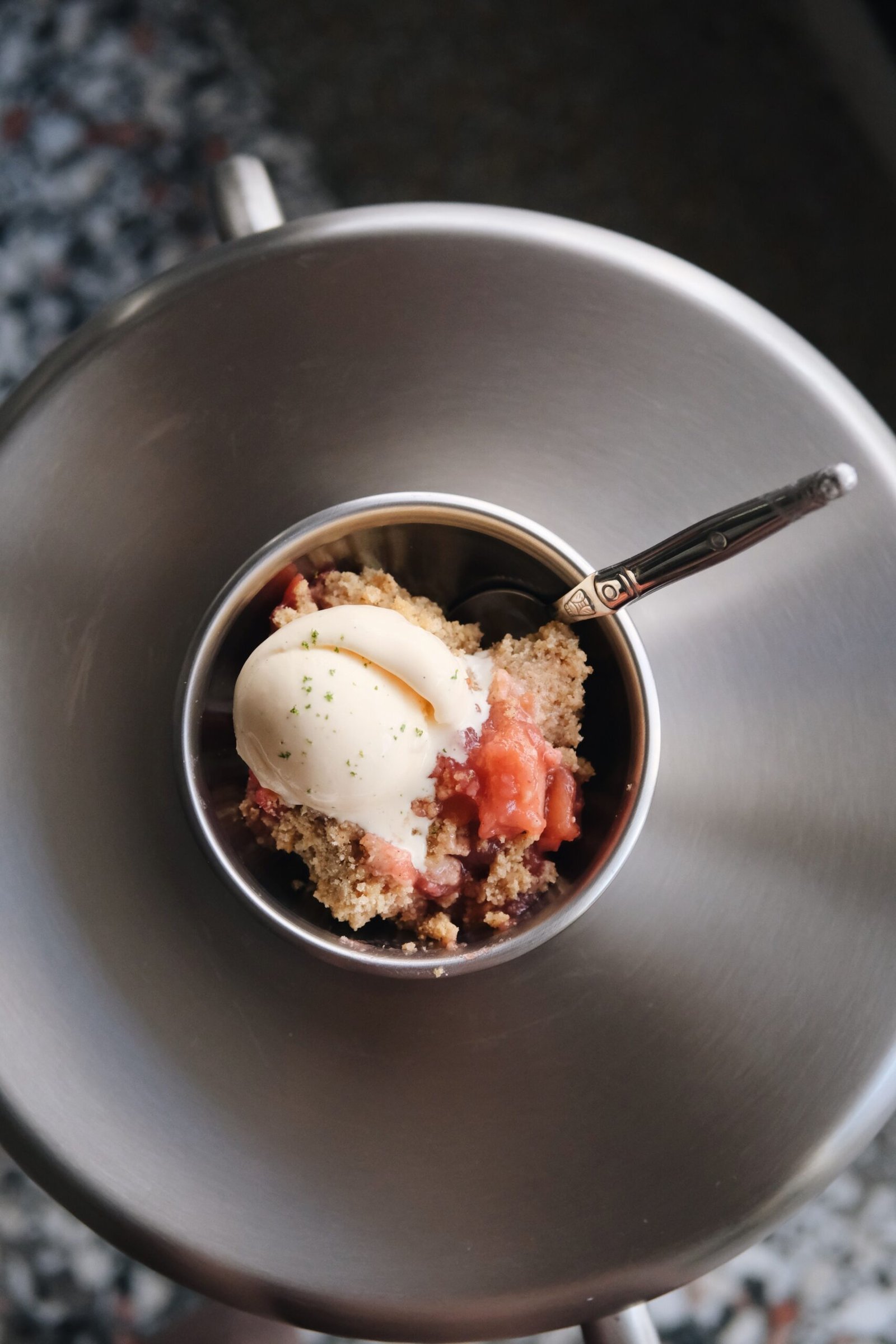
If you want a crumble recipe that works every time, here it is in one sentence: fruit tossed with a little sugar, baked under a crisp topping of flour, cold butter and sugar until bubbling and golden. That is the whole idea, and it is why the crumble is one of Britain’s most loved puddings. This guide gives you the basic version, the classic apple crumble, rhubarb, plum, blackberry, pear and peach variations, and the oat-topped versions — with the tips that keep the topping crisp instead of soggy.
What Is a Crumble?
A crumble is a baked fruit pudding with a streusel-style topping. Unlike a pie, it has no pastry base or lid: the fruit goes straight into a baking dish and the crumbly topping is scattered over it. The dish became popular in Britain during the Second World War, when rationing made flour, fat and sugar scarce. A crumble topping uses far less of each than pastry, so it was a clever wartime substitute — and it stayed popular long after rationing ended because it is simpler and, many would say, better.
The difference between a crumble and an American crisp is small but real. A crisp topping usually contains rolled oats and often chopped nuts, giving a chewier, crunchier texture. A classic British crumble topping is just flour, butter and sugar, which bakes into a short, sandy crunch. Many modern recipes borrow from both, adding oats to a crumble topping for extra texture, and this guide covers both styles.
The Basic Crumble Recipe
Every version starts from the same two parts: the fruit filling and the topping. For a standard dish serving four to six people, use about 600–700g of prepared fruit and a topping made from 200g plain flour, 100g cold unsalted butter and 100g sugar. Caster sugar gives a fine, even sweetness; demerara sugar gives a slightly caramel crunch. Toss the fruit with 2–3 tablespoons of sugar and a tablespoon of cornflour, which thickens the juices so the filling is saucy rather than watery.
The Topping
The topping is where most crumbles succeed or fail, and the rules are simple. Start with cold butter, cut into small cubes, and rub it into the flour with your fingertips until the mixture looks like rough breadcrumbs, then stir in the sugar. Do not overwork it: if you keep rubbing, the butter warms up and the topping turns into dough, which bakes flat and greasy instead of crisp. Scatter the topping loosely over the fruit — do not press it down — and bake at 180–190°C (350–375°F) for 35–45 minutes, until the fruit is bubbling at the edges and the topping is golden.
The Fruit Filling
The fruit filling needs almost no work. Peel, core or stone the fruit as needed, cut it into even pieces, and toss with sugar and cornflour. How much sugar depends on the fruit: sweet fruit such as peaches and ripe plums needs very little, while tart fruit such as rhubarb needs more. A squeeze of lemon juice brightens the flavour and stops apples and pears from browning. Spread the fruit in an even layer in a buttered baking dish, cover with the topping, and bake.
Easy Crumble Recipe
The easy version is the one to learn first. Use a bag of frozen mixed berries, a topping made in a food processor in under a minute, and a baking dish. Pulse the flour, cold butter and sugar together until crumbly, scatter over the fruit, and bake at 190°C for about 35 minutes. Frozen fruit works well and needs no thawing — just add five extra minutes in the oven. This version is ready from start to finish in under an hour, and it tastes like the slow version because the method is the same.
Best Crumble Recipe
The best version is not a secret ingredient — it is getting the details right. Use cold butter and do not overwork the topping. Use a mix of sugar: caster sugar in the topping for sweetness and a spoonful of demerara on top for crunch. Choose fruit that is ripe but still firm, so it softens without turning to mush. Bake until the juices are visibly bubbling at the edges, which means the fruit is fully cooked, and then let the crumble rest for ten minutes before serving so the filling sets slightly. Serve it warm, with custard, cream or ice cream.
Apple Crumble Recipe
The apple version is the classic, and the one most people mean when they say “crumble”. In the UK, Bramley apples are the traditional choice: they are sharp and they break down in the oven into a soft, fluffy purée that sits beautifully under a crisp topping. Peel and core about 700g of Bramleys, cut them into chunks, toss with 2 tablespoons of sugar, a tablespoon of cornflour and a squeeze of lemon, and top with the basic topping. A pinch of cinnamon or a little grated nutmeg is a classic addition. Bake at 180°C for 40 minutes until golden and bubbling, and serve warm with custard.
Apple Crumble Recipe UK
The apple crumble recipe UK cooks make most often is the wartime classic: Bramley apples, a flour-butter-sugar topping, and custard on the side. Custard is the traditional partner, and in Britain a crumble is rarely served without it. If you cannot find Bramleys, use a sharp cooking apple, or mix a sweet apple such as Braeburn with a squeeze of lemon.
Easy Apple Crumble Recipe
The easy apple crumble recipe cuts the work to the minimum. Peel and slice two or three eating apples — no need for Bramleys here — toss with a spoonful of sugar and cinnamon, and cover with a topping made in a food processor. Bake at 190°C for 30–35 minutes. Because eating apples hold their shape better than Bramleys, the filling stays chunky, which many people prefer.
Best Apple Crumble Recipe
The best apple crumble recipe mixes two types of apple. Use half Bramley for the soft, sharp base and half Braeburn or Cox for chunks that hold their shape, so the filling has both texture and flavour. Add a pinch of cinnamon and a little lemon zest, and use demerara sugar in the topping for a caramel crunch. Bake at 180°C for 40–45 minutes until the juices bubble up around the edges, then rest for ten minutes and serve with warm custard or vanilla ice cream.
Apple Crumble Recipe with Oats
The apple crumble recipe with oats swaps part of the flour for rolled oats, which makes the topping crunchier and a little chewier. Use 150g flour, 50g rolled oats, 100g cold butter and 100g sugar, rubbed together the same way. The oats toast in the oven and give a nutty flavour that suits apples especially well. A spoonful of chopped hazelnuts or almonds is a good addition if you like nuts.
Apple and Blackberry Crumble Recipe
The apple and blackberry crumble recipe is the classic autumn combination. Use about 500g of apples and 200g of blackberries, tossed together with sugar and cornflour. The blackberries add a deep, wine-like flavour and a beautiful purple juice that stains the apples. Because blackberries are sweet, use less sugar than you would for rhubarb — about 2 tablespoons is usually enough. This is the crumble to make in late summer and early autumn, when blackberries are in season.
Simple Apple Crumble Recipe
The simple apple crumble recipe is the shortest version of all: sliced apples, sugar, and a topping of flour, butter and sugar in equal parts by weight. No cornflour, no lemon, no spices — just the three topping ingredients and the fruit. It works because the formula is forgiving: as long as the butter is cold and the topping is not overworked, the result is golden and crisp.
Rhubarb Crumble Recipe
The rhubarb crumble recipe is the sharpest of the classics. Rhubarb is very tart, so it needs more sugar than apples — about 4–5 tablespoons for 600g of rhubarb — and it cooks down quickly, in about 30 minutes. Cut the stalks into 2–3cm pieces, toss with sugar and a tablespoon of cornflour, and cover with the basic topping. A little grated orange zest or a pinch of ground ginger works well with rhubarb. Bake at 180°C for 35–40 minutes until bubbling, and serve with custard or cream to balance the tartness.
Rhubarb Crumble Recipe UK
The rhubarb crumble recipe UK gardens made famous uses forced rhubarb from the Yorkshire Rhubarb Triangle, where rhubarb is grown in dark sheds and harvested by candlelight in winter and early spring. Forced rhubarb is pink, tender and slightly sweeter than outdoor rhubarb, and it needs less sugar. Rhubarb crumble is a spring pudding in Britain, and one of the first signs that the growing season has begun.
Plum Crumble Recipe
The plum crumble recipe uses Victoria plums, the classic British plum, halved and stoned. Plums are juicy, so toss them with a tablespoon of cornflour and only 2 tablespoons of sugar. They cook quickly and turn soft and jammy under the topping. A pinch of cinnamon or a little almond extract suits plums well, and a spoonful of flaked almonds in the topping is a classic touch. Bake at 180°C for 35 minutes. Plum crumble is best in late summer, when plums are ripe and inexpensive.
Blackberry Crumble Recipe
The blackberry crumble recipe is the simplest fruit crumble of all, because blackberries need almost no preparation. Pick over 500–600g of blackberries, toss with 2 tablespoons of sugar and a tablespoon of cornflour, and cover with the basic topping. Blackberries release a lot of juice, so the cornflour matters here — without it, the filling can be watery. Bake at 180°C for 35 minutes until the juices bubble, and serve with cream or ice cream.
Pear Crumble Recipe
The pear crumble recipe uses Conference pears, which hold their shape better than most pears when baked. Peel and slice about 600g of pears, toss with 2 tablespoons of sugar, a tablespoon of cornflour and a squeeze of lemon, and cover with the basic topping. Pears are gentle in flavour, so a pinch of ground ginger or cinnamon helps them along. Bake at 180°C for 35–40 minutes until golden. Pear crumble is a good autumn pudding, when pears are at their best.
Peach Crumble Recipe
The peach crumble recipe is a summer favourite. Use ripe but firm peaches, about 600g, halved, stoned and sliced — there is no need to peel them, as the skins soften in the oven. Toss with just 1–2 tablespoons of sugar and a tablespoon of cornflour, because ripe peaches are already sweet. A little almond extract or a spoonful of flaked almonds in the topping suits peaches well. Bake at 180°C for 30–35 minutes and serve warm with vanilla ice cream.
Fruit Crumble Recipe
The fruit crumble recipe is the general rule behind all the others: almost any fruit can become a crumble. Mixed berries, apple and pear, plum and blackberry, or peach and raspberry all work, as long as you adjust the sugar to the fruit. Soft fruit needs less cooking time and a little more cornflour; firm fruit such as apples needs longer and holds its shape. Frozen mixed fruit is a useful shortcut — use it straight from the freezer and add five minutes to the baking time. The topping never changes, which is what makes the crumble such a forgiving pudding: learn one topping and you can make a crumble from whatever fruit is in season.
Crumble Recipe with Oats
The crumble recipe with oats is the crunchiest version. Replace about a quarter of the flour with rolled oats — 150g flour and 50g oats to 100g butter and 100g sugar — and rub together as usual. The oats toast in the oven and give the topping a nutty, chewy crunch that plain flour alone does not. Use jumbo rolled oats rather than instant oats, which can turn soft. A spoonful of demerara sugar on top adds extra crunch. This topping works with every fruit in this guide, but it is especially good with apples, pears and plums.
Crumble Recipe UK
The crumble recipe UK households pass down is a wartime invention that became a national favourite. It was born in the Second World War, when rationing made pastry expensive, and it stayed because it is quicker, cheaper and easier than a pie. The traditional version is Bramley apple with a flour, butter and sugar topping, served with custard. In Britain, the crumble is a Sunday lunch pudding and a school dinner classic, and the debate about custard versus cream versus ice cream is a friendly one that has run for generations.
How to Serve a Crumble
A crumble is best served warm, about ten minutes after it comes out of the oven, when the filling has set slightly and the topping is still crisp. Custard is the traditional partner in Britain, poured warm over the top. Cream is the simplest choice, and vanilla ice cream is the favourite for a hot pudding — the cold ice cream against the warm crumble is hard to beat. Leftovers keep well in the fridge for two or three days and can be reheated in the oven at 180°C for 15 minutes, which restores the topping’s crunch far better than a microwave.
Common Mistakes to Avoid
The most common crumble mistake is overworking the topping. If you rub the butter in for too long, it warms up and the mixture turns into dough, which bakes flat and greasy. Keep the butter cold, work quickly, and stop as soon as the mixture looks like breadcrumbs. The second mistake is pressing the topping down — scatter it loosely so air can circulate and it crisps up. The third is underbaking: if the fruit is not bubbling at the edges, it is not cooked, and the topping will be pale. And the fourth is skipping the cornflour with juicy fruit, which leaves a watery filling. Avoid these four and your crumble will be golden and crisp every time.
What is the basic crumble recipe?
The basic crumble recipe is fruit tossed with a little sugar and cornflour, baked under a topping of flour, cold butter and sugar. For a standard dish, use 200g plain flour, 100g cold butter and 100g sugar over about 600–700g of fruit, and bake at 180–190°C for 35–45 minutes until golden and bubbling.
What apples are best for apple crumble?
Bramley apples are the traditional choice for apple crumble in the UK because they are sharp and break down into a soft purée. Braeburn, Cox and Granny Smith also work well. Avoid very sweet eating apples on their own, as the filling can become too sweet — or mix them with a squeeze of lemon.
How long do you bake a crumble?
Bake a crumble at 180–190°C for 35–45 minutes, until the topping is golden and the fruit juices are bubbling at the edges. Frozen fruit needs about five extra minutes. Let the crumble rest for ten minutes before serving so the filling sets slightly.
Can you make a crumble with frozen fruit?
Yes, frozen fruit works well in a crumble. Use it straight from the freezer with no thawing, add a tablespoon of cornflour to thicken the extra juice, and bake for about five minutes longer than fresh fruit. Frozen mixed berries are a good choice for a quick crumble.
Why is my crumble topping soggy?
A soggy topping usually means the butter was too warm, the topping was overworked into dough, or the topping was pressed down instead of scattered loosely. Use cold butter, rub it in quickly until the mixture looks like breadcrumbs, and scatter it loosely over the fruit without pressing.
What is the difference between a crumble and a crisp?
A British crumble topping is flour, butter and sugar, which bakes into a short, sandy crunch. An American crisp topping usually includes rolled oats and often chopped nuts, giving a chewier, crunchier texture. Many recipes combine the two by adding oats to a crumble topping.
Can I make a crumble ahead of time?
Yes. You can prepare the fruit and topping separately and keep them in the fridge for up to a day, then assemble and bake when needed. A baked crumble keeps in the fridge for two or three days and reheats well in the oven at 180°C for 15 minutes. You can also freeze the topping on its own for up to three months.
What do you serve with crumble?
Custard is the traditional partner for crumble in Britain, served warm over the top. Cream, vanilla ice cream and Greek yoghurt are all good alternatives. Serve the crumble warm, about ten minutes after it comes out of the oven, when the topping is still crisp.
Whether you make the classic apple crumble, a sharp rhubarb crumble, or a mixed fruit crumble with an oat topping, the method is the same: cold butter, a loose topping, and a hot oven until the fruit bubbles. Start with the basic crumble recipe, try one new fruit each time, and you will soon have a favourite of your own. For more recipes, food guides and kitchen ideas, visit Smart Visions.
